
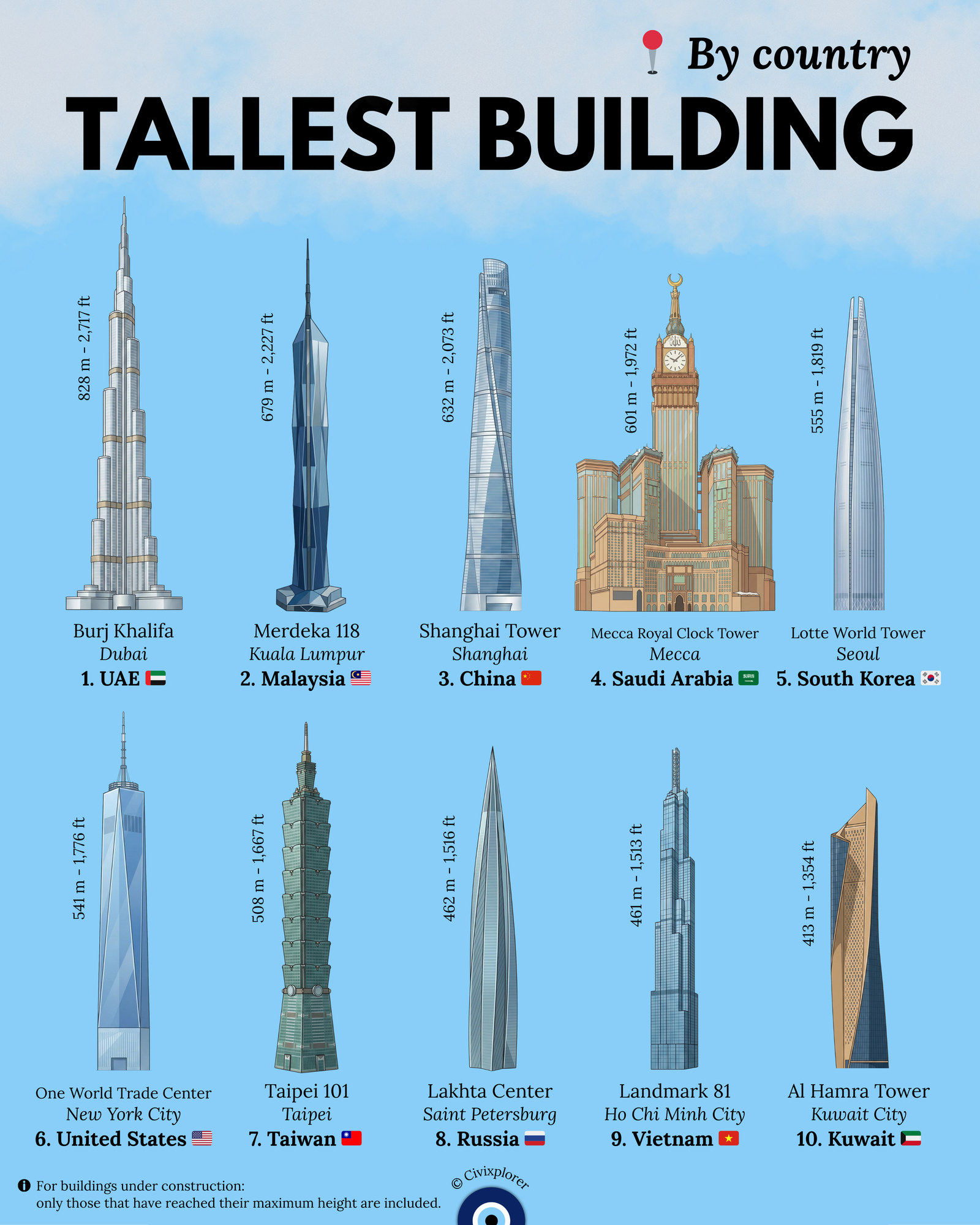
The global skyline is undergoing a massive geopolitical transformation. For most of the 20th century, the United States was the undisputed birthplace and home of the skyscraper. However, as of 2026, the data reveals a striking shift: the quest for verticality has moved almost entirely to Asia and the Middle East. Today, only One World Trade Center in New York City remains in the global top ten, signaling a new era of architectural ambition.
At the pinnacle stands the Burj Khalifa in the UAE, reaching a staggering 828 meters. This tower was never just about office space; it was a strategic "prestige project" designed to rebrand Dubai as a global tourism and financial hub, diversifying its economy away from oil. Following closely is Malaysia’s Merdeka 118, which stands at 679 meters. Its design is deeply symbolic, facets of its structure mimicking the gesture of independence made by the nation’s first prime minister.
The dominance of the East is driven by rapid urbanization and state-backed capitalism. In megacities across China, Vietnam, and the Philippines, building upward is a necessity to manage extreme population density. Furthermore, in the Gulf States, monumental construction often receives heavy government funding, allowing these nations to use supertall structures as signals of technological prowess and modernity to attract foreign investment.
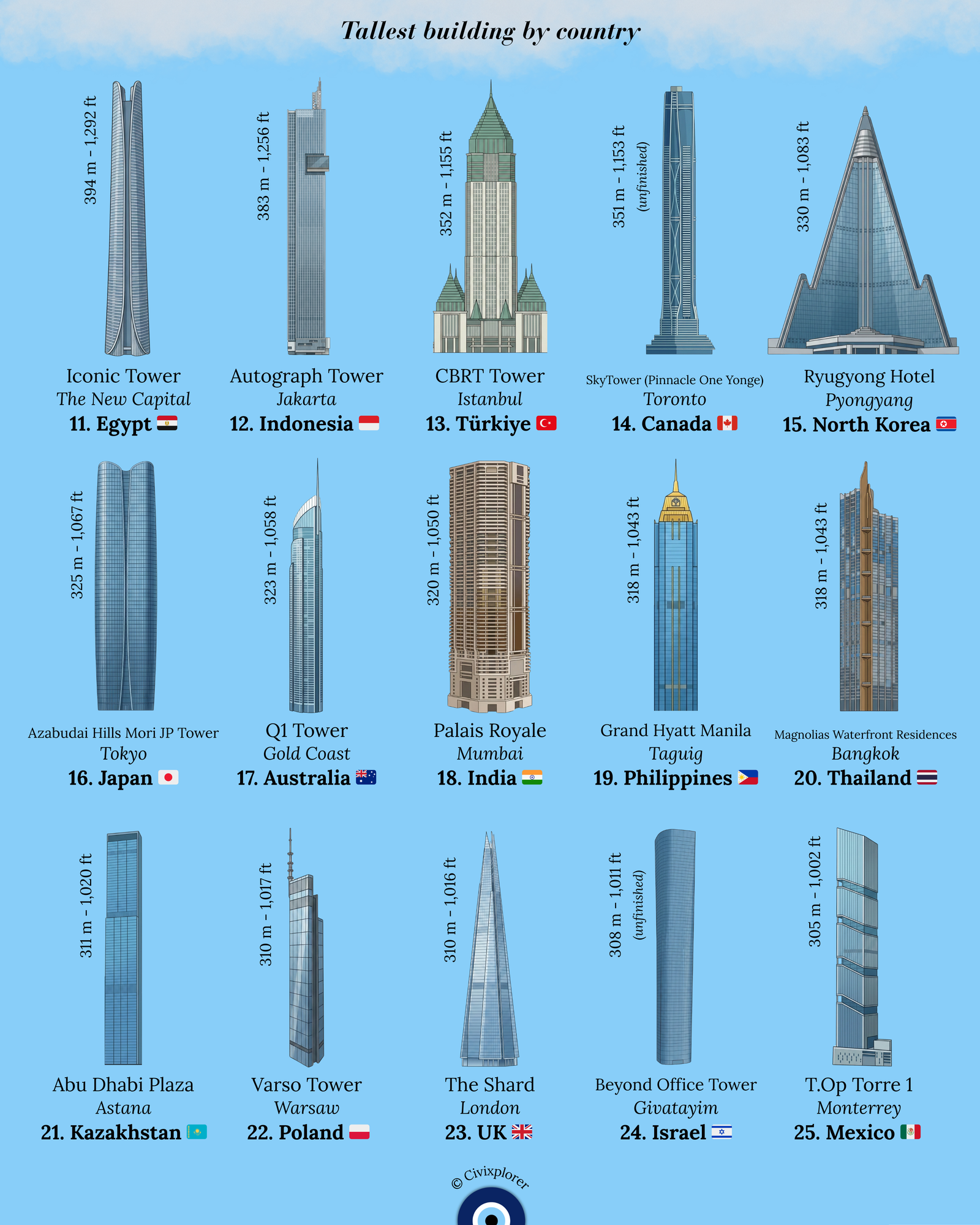
Interestingly, traditional Western European powerhouses like Germany, France, and Italy are nowhere to be found on the top 25 list. This "European Exception" is deliberate. Cities like Paris and London prioritize historical preservation and maintain strict zoning laws to protect their medieval street grids and classic aesthetics. For these nations, prestige is found in "human-scale" density and the preservation of centuries-old skylines rather than record-breaking heights.
A fascinating outlier in this ranking is North Korea’s Ryugyong Hotel. At 330 meters, it remains a bizarre relic of Cold War vanity. Often called the "Hotel of Doom," it sat as an empty concrete shell for decades following an economic collapse. While it now features exterior glass, it remains largely vacant, serving more as a propaganda monument than a functional hub of enterprise.
Ultimately, these heights tell a story of shifting power. While established powers focus on preservation, emerging economies are weaponizing verticality to claim their spot on the world stage.
Comments (0)
Join the Conversation
Login to share your thoughts with the community.
Login to Comment