
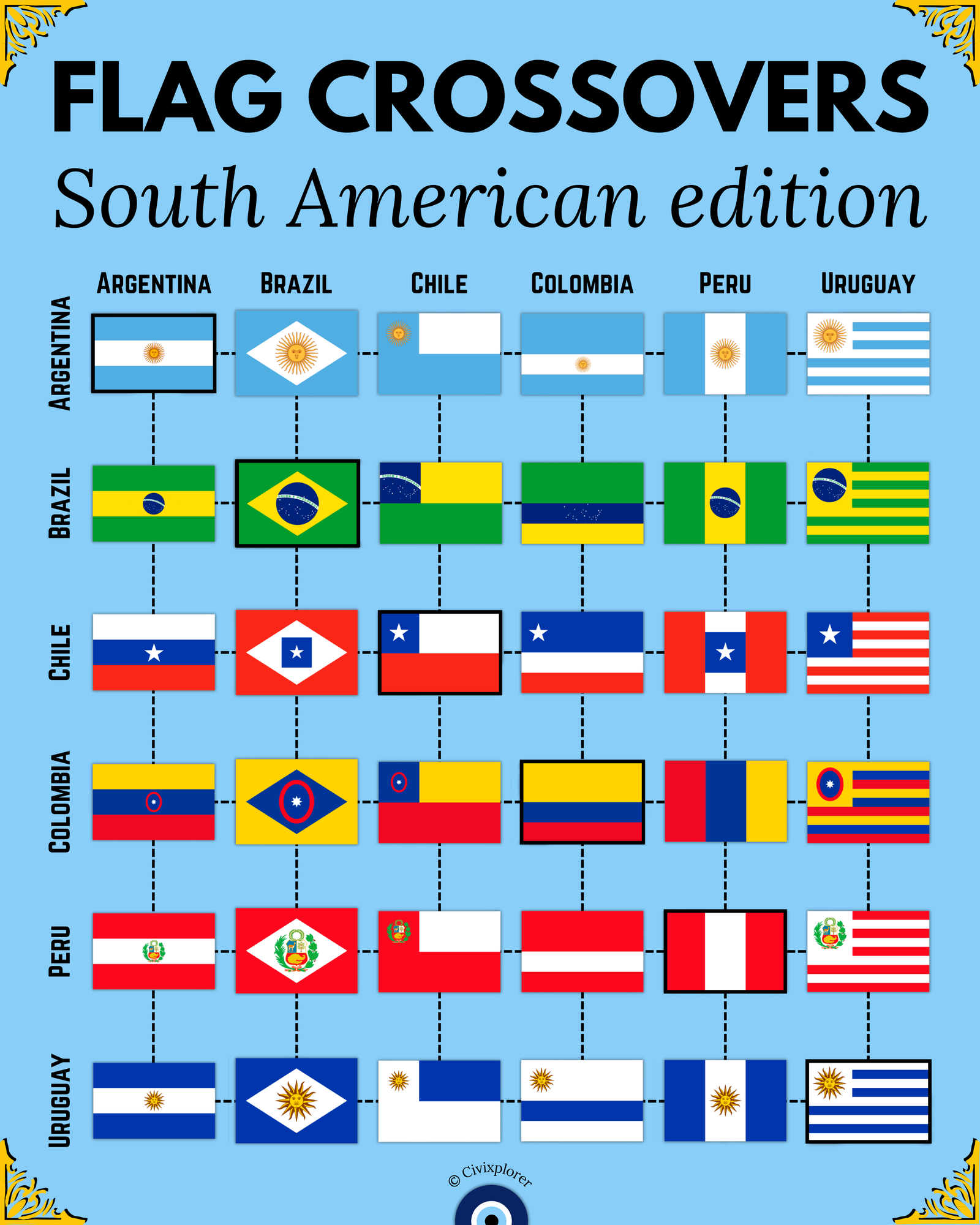
The visual identity of a nation is often distilled into its flag, a canvas of history, revolution, and cultural pride. In South America, this identity is deeply intertwined through shared struggles for independence and common heritage. By creating a vexillological matrix—a grid where the rows determine the color palette and emblems, and the columns determine the geometric layout—one can explore the unique "DNA" of these national symbols.
One of the most recurring elements in the region is the Sun of May (Sol de Mayo), a representation of the Incan sun god, Inti. Featured prominently on the flags of Argentina and Uruguay, this emblem commemorates the May Revolution of 1810, which initiated the independence movement for the Viceroyalty of the Río de la Plata from Spain. When these sun-centric aesthetics are applied to different layouts, such as the vertical bands of Peru, the result is a striking fusion of revolutionary history.
Brazil stands as a unique outlier due to its Portuguese imperial roots. Unlike the Spanish-influenced tribands of its neighbors, the Brazilian flag features a central diamond (lozenge). While often associated with natural resources, these colors originally represented the royal houses of Braganza and Habsburg. The diamond shape itself is a holdover from the flag of the Brazilian Empire. Applying this layout to the colors of Chile transforms the "Solitary Star" into a focal point within a white diamond, completely shifting its traditional visual impact.
Further north, the influence of Francisco de Miranda remains dominant. The bold yellow, blue, and red palette he conceived for Gran Colombia persists in the modern flags of Colombia, Venezuela, and Ecuador. Mapping these vibrant colors onto the multi-striped structure of Uruguay creates a visual representation of how political ideals from the 19th century still define the continental landscape.
Interestingly, these design experiments occasionally produce accidental resemblances to other global flags. For example, the crossover between Chile and Uruguay often results in a design that mirrors the flag of Liberia, featuring red-and-white stripes with a blue canton. This highlights the universal language of flag design, where shared shapes and colors can bridge continents and histories.
Comments (0)
Join the Conversation
Login to share your thoughts with the community.
Login to Comment