
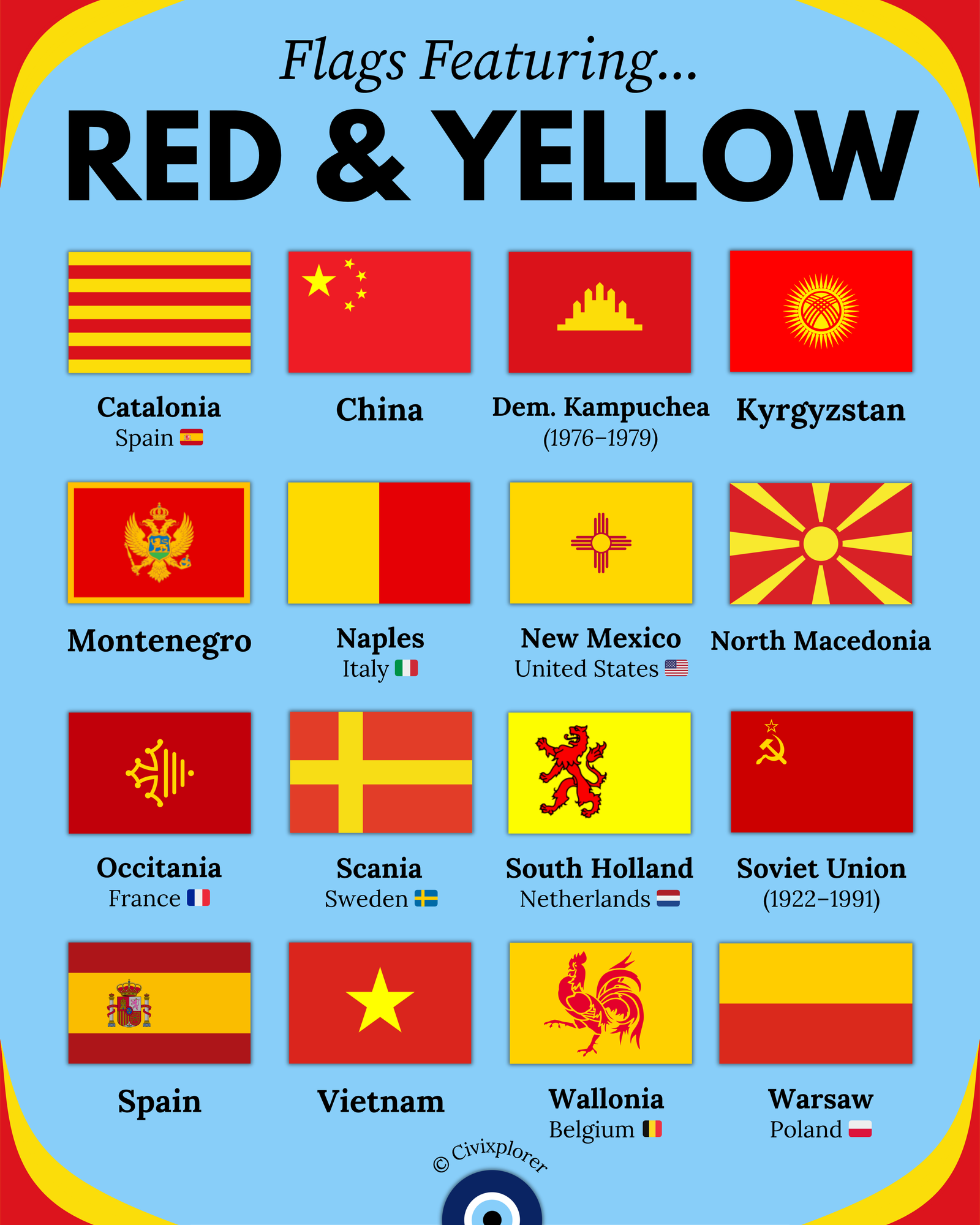
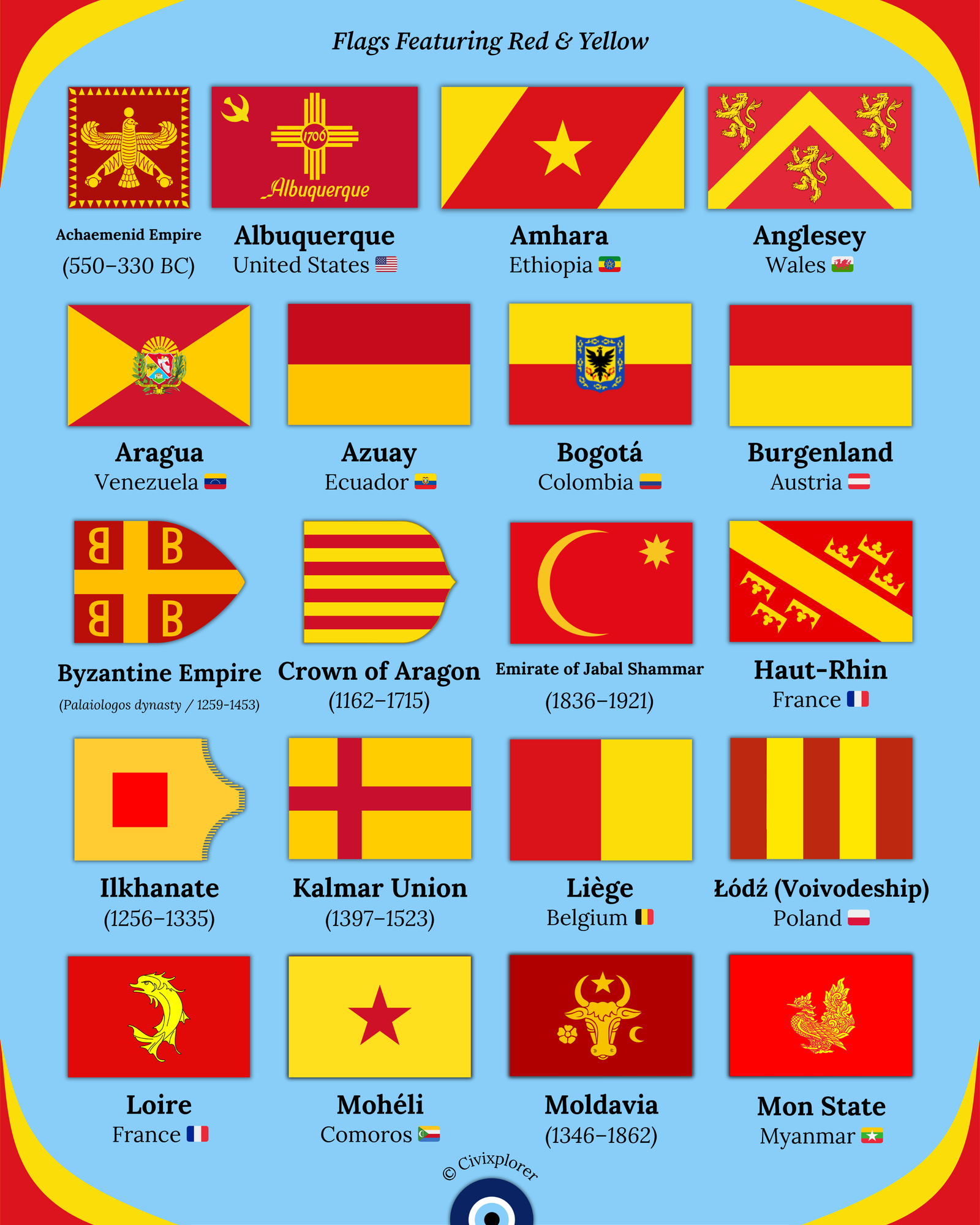
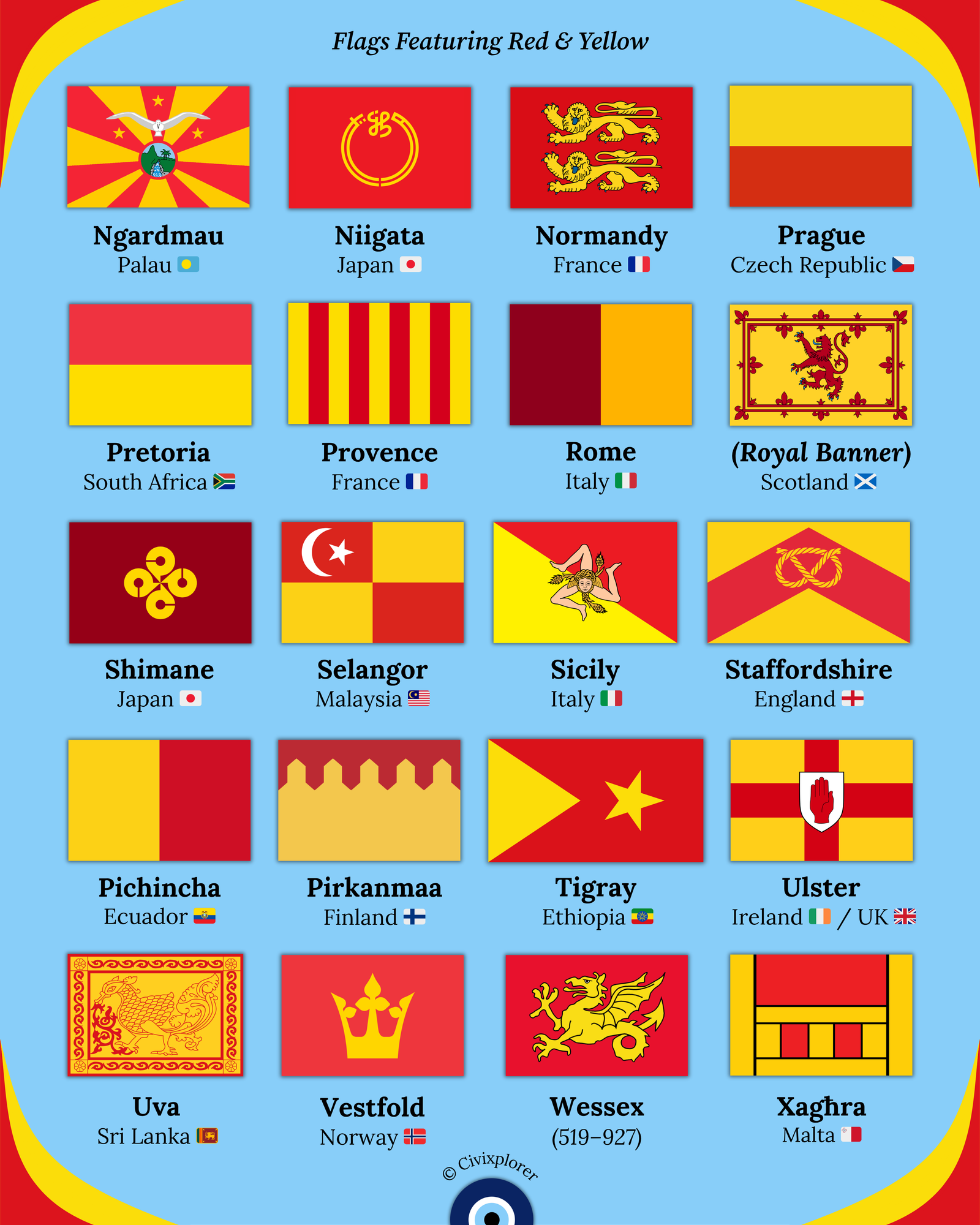
The visual landscape of world flags is a tapestry of history, identity, and power, but few color combinations are as striking and pervasive as red and yellow (or gold). Whether fluttering over a medieval castle, a modern revolutionary capital, or a historic city-state, this high-contrast duo has been the preferred choice for civilizations for over a millennium. Far from being a mere aesthetic preference, the pairing of these two hues—known in heraldry as Gules (red) and Or (gold/yellow)—encodes deep-seated narratives of sacrifice, prosperity, and authority.
The Medieval Legacy: The Legend of Blood and Gold
A significant portion of the red and yellow flags found in Western Europe and the Mediterranean traces its lineage back to the Crown of Aragon. This medieval maritime power used the Senyera, a design of four red stripes on a golden field. According to a 14th-century legend, the design was born when a Frankish king dipped his fingers into the blood of a dying count and dragged them across a golden shield. While the story is mythical, the impact of this "blood and gold" palette is undeniable. It directly influenced the modern Spanish national flag, adopted in 1785 for its high visibility at sea, and remains the foundation for regional identities in Catalonia, Provence, and Naples.
The Palette of Revolution: Communism and Socialism
In the 20th century, the meaning of red and yellow shifted from royal heraldry to the iconography of proletarian struggle. Red became the universal symbol for the blood spilled by workers and revolutionary martyrs, a tradition cemented during the French Revolution and the Paris Commune. Combined with yellow symbols—such as the Soviet hammer and sickle or the five-pointed stars of China and Vietnam—the palette represented a "bright" socialist future. In these flags, yellow serves as the guiding light of ideology, providing a vivid contrast against the revolutionary red field.
Solar Imagery and Sacred Connections
Beyond politics and war, red and yellow are naturally tied to the most powerful force in the sky: the sun. This connection is beautifully illustrated in the flag of New Mexico, which features the red Zia sun symbol on a yellow field. This design is a masterclass in cultural synthesis, honoring the state’s Spanish colonial heritage (the colors of Aragon) while centering an ancient indigenous emblem that represents the four directions and the cycles of life. Similarly, the flags of Kyrgyzstan and North Macedonia utilize the yellow sun on a red field to evoke themes of liberty, nomadic unity, and national rebirth.
Heraldic Might and Ancient Empires
Historically, the preference for red and gold was rooted in the practicality of the battlefield. These colors offered the highest visibility for knights and commanders. Ancient entities like the Byzantine Empire and the Mongol Ilkhanate utilized these tones to project imperial authority. Even today, municipal and regional flags—from the red rooster of Wallonia to the heraldic lions of Scotland and Normandy—continue to use this palette to bridge the gap between ancient martial prestige and modern local pride. Ultimately, red and yellow transcend borders; they are a universal grammar of human aspiration, representing the fire of revolution and the gold of prosperity.

Comments (0)
Join the Conversation
Login to share your thoughts with the community.
Login to Comment