
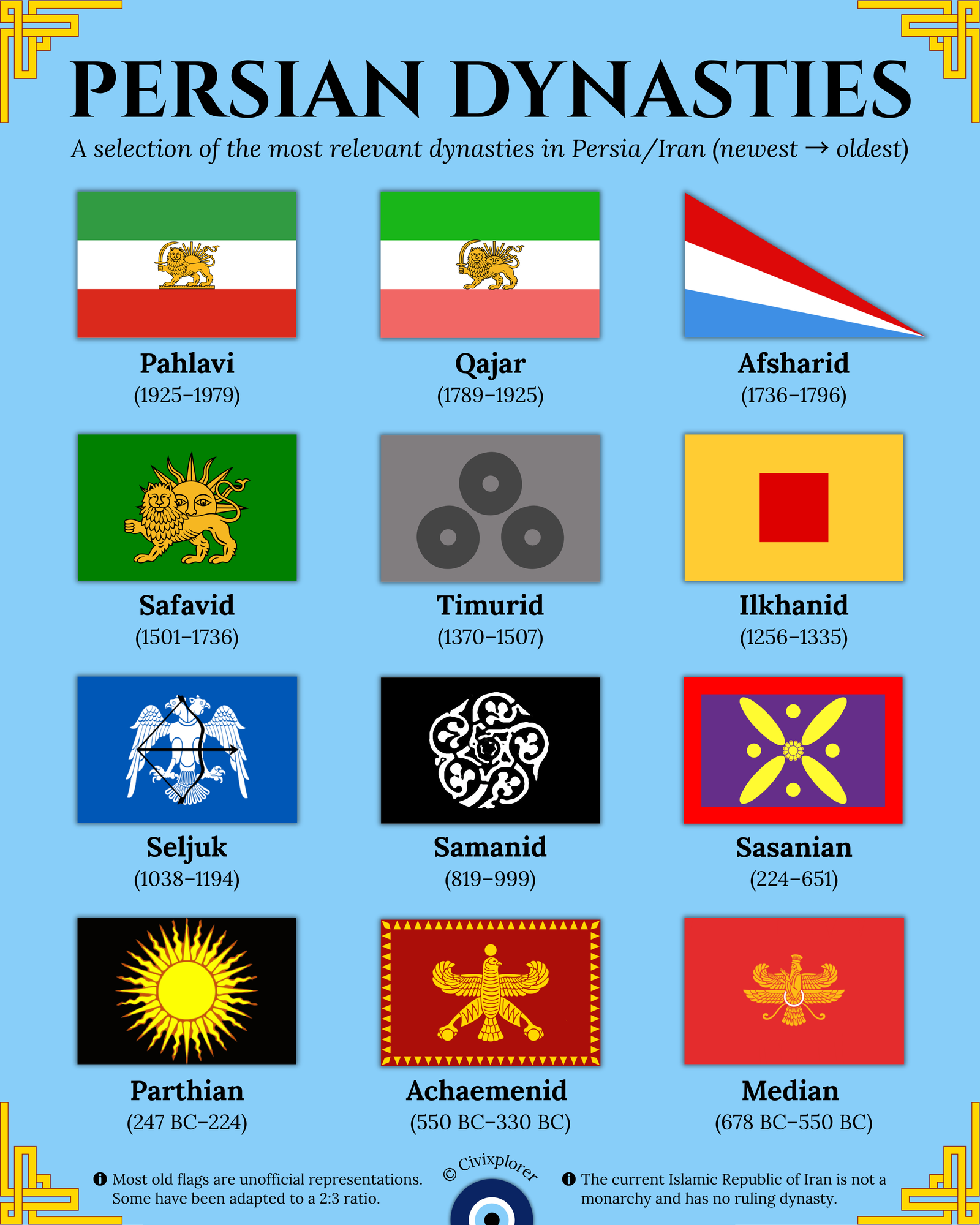
The history of Iran is one of the world’s most profound narratives of cultural continuity and resilience. Spanning more than two and a half millennia, the evolution of Persian dynasties offers a window into how an ancient civilization can absorb foreign influences while maintaining a core identity. From the early foundations of the Median and Achaemenid empires to the end of the monarchy in 1979, the Iranian plateau has been the stage for some of humanity's most significant achievements.
The Achaemenid Empire, established by Cyrus the Great, remains a pinnacle of historical governance. Cyrus is celebrated not just for his military prowess, but for his administrative innovations and religious tolerance, famously allowing exiled populations to return home. His legacy provided a template for the Persian state that lasted for centuries. This era of pre-Islamic splendor reached another height under the Sasanian Empire, which was characterized by a centralized administration, vibrant artistic expression, and its role as a major rival to the Roman and Byzantine worlds.
The transition into the Islamic era did not erase the Persian spirit; instead, it transformed it. Even under the rule of Turkic or Mongol dynasties such as the Seljuks, Ilkhanids, and Timurids, the "Persianate" world flourished. These rulers often became patrons of Persian poetry, architecture, and bureaucracy, effectively becoming Persianized themselves. It was the Safavid dynasty, however, that arguably had the most transformative impact on modern identity. By declaring Twelver Shia Islam as the state religion in the 16th century, the Safavids unified diverse ethnic groups under a single faith, creating the coherent nation-state framework that largely defines the borders of Iran today.
Throughout this long timeline, symbols have played a crucial role in visualizing authority. From the ancient Faravahar representing divine grace to the iconic Lion and Sun motif that graced the flags of the Qajar and Pahlavi eras, these emblems connected the state to its deep historical and astrological roots. While the 1979 Revolution transitioned the nation from a monarchy to a theocratic republic, the historical legacy of the previous dynasties continues to be a source of pride and a focal point for understanding the complex geopolitical landscape of the modern era.
Comments (0)
Join the Conversation
Login to share your thoughts with the community.
Login to Comment