
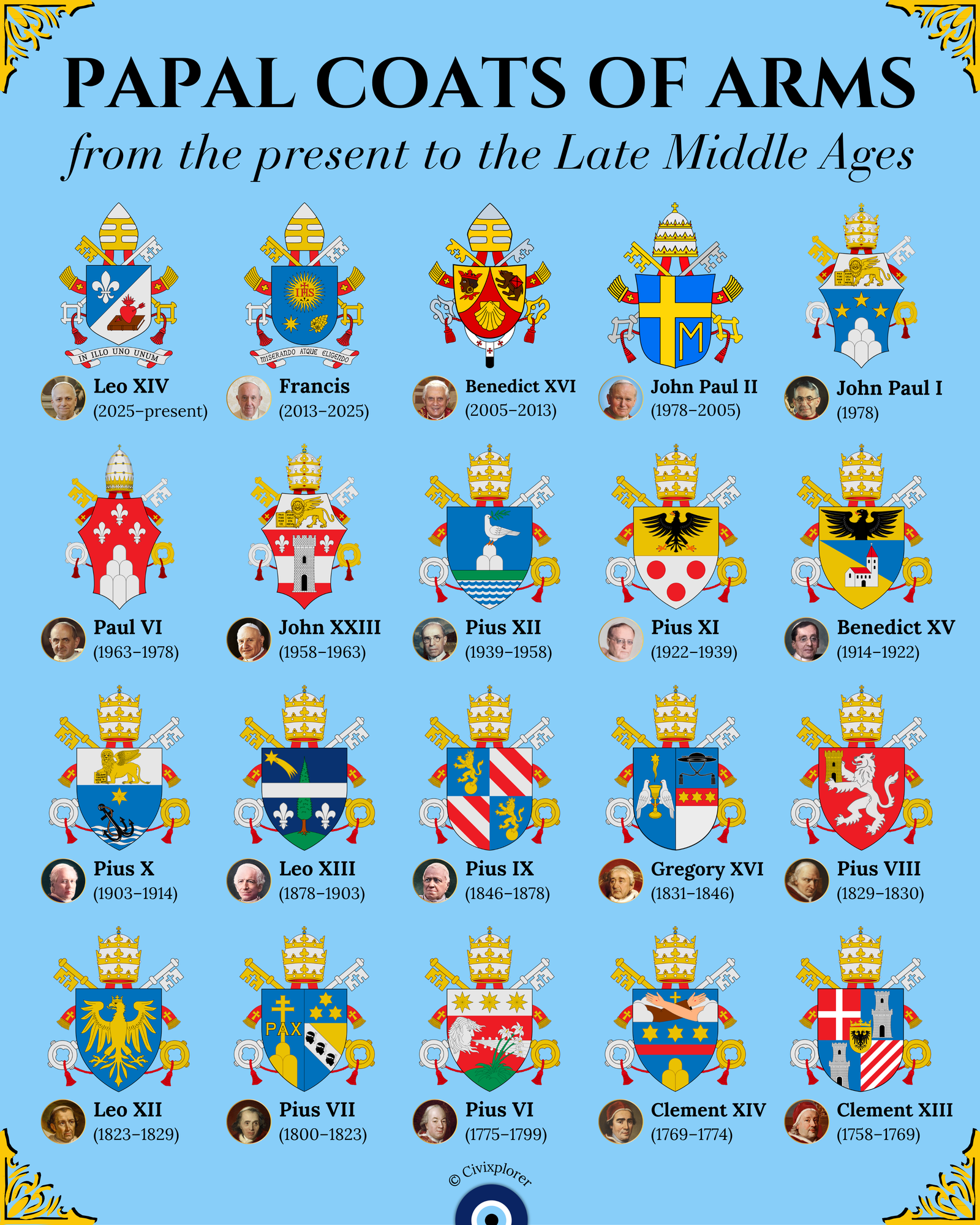
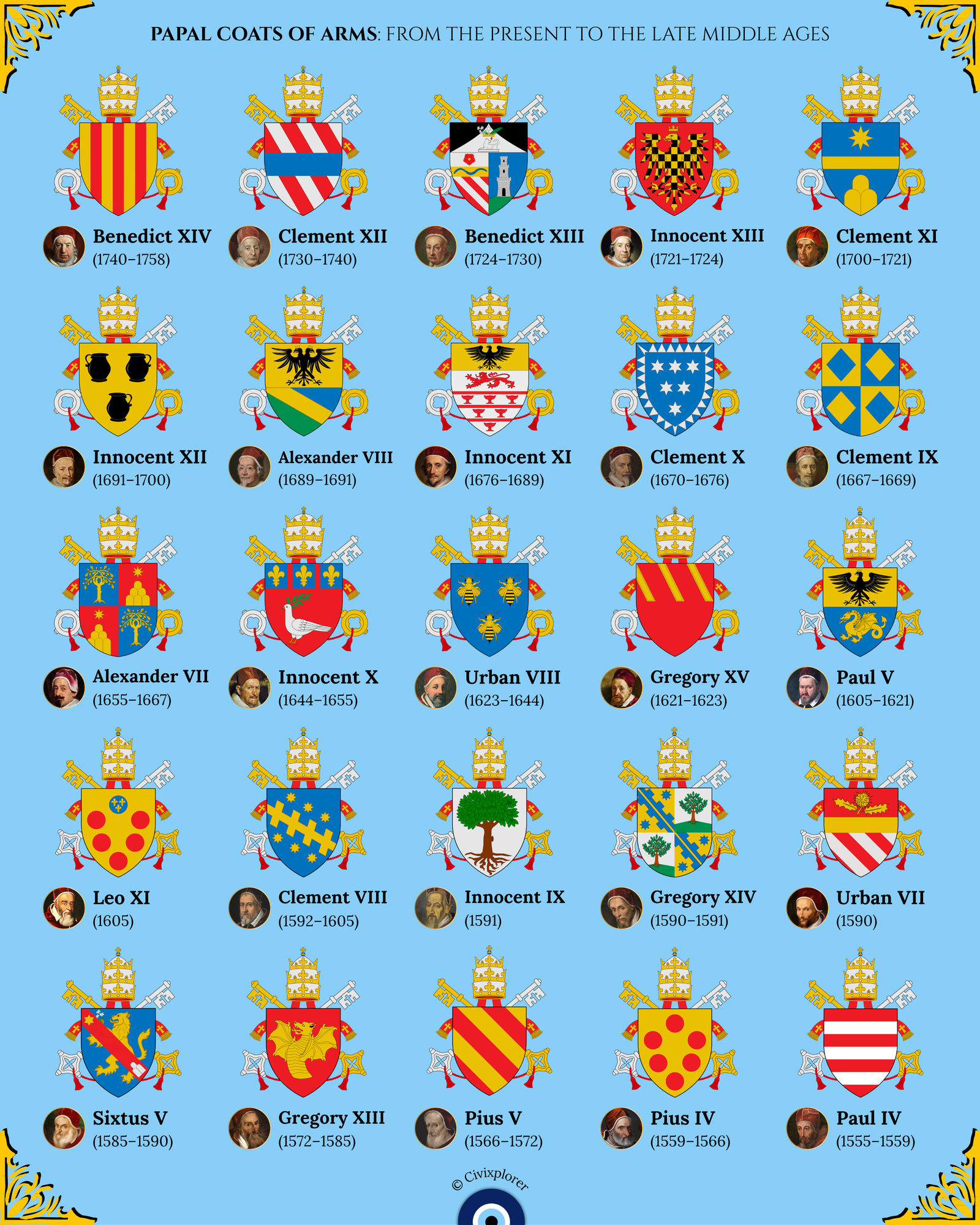
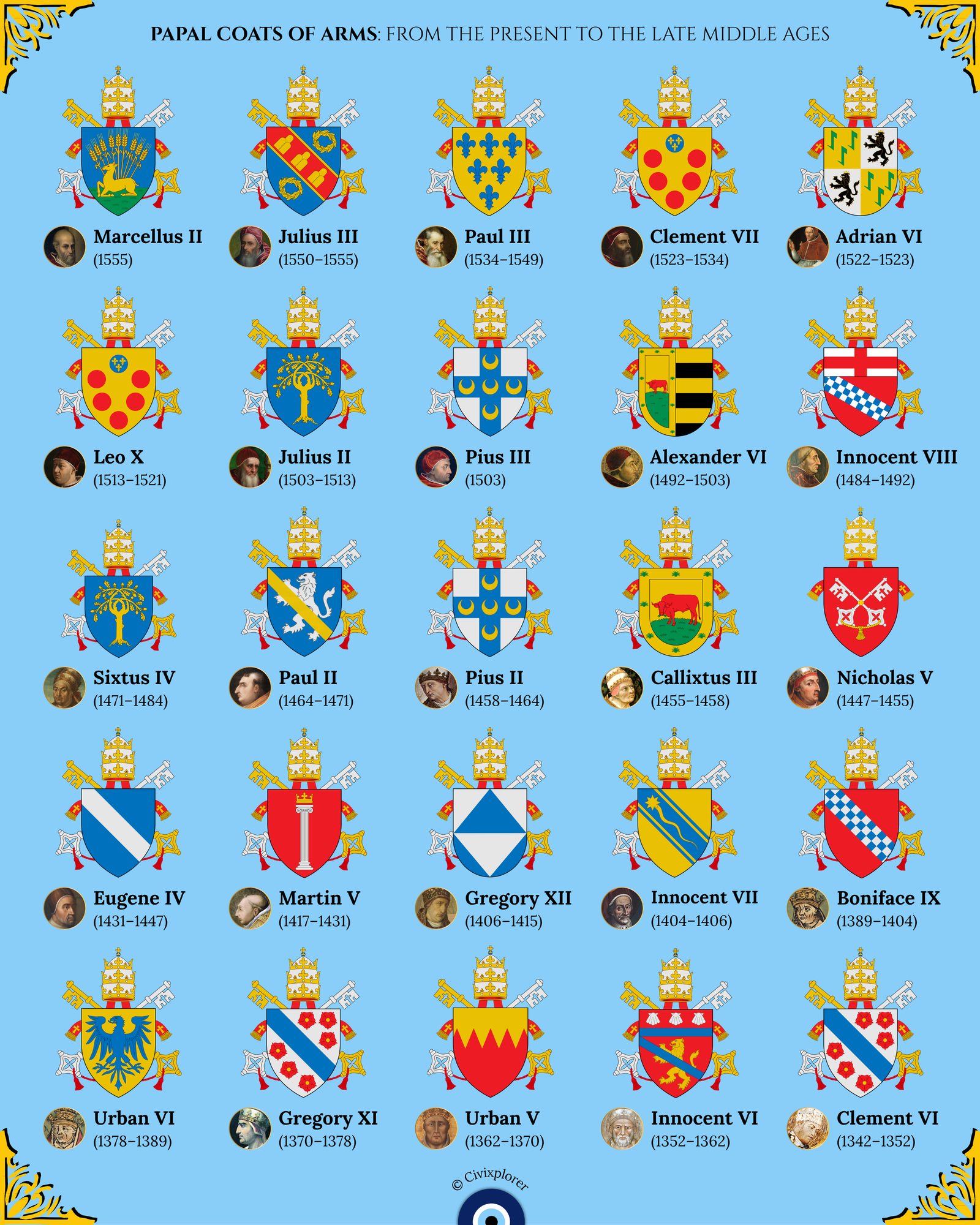
The history of the papacy is not just written in documents, but carved into stone and painted onto shields. Papal coats of arms have been a formal tradition since the Late Middle Ages, serving as a visual signature for each pontificate. While the unchanging arms of the Holy See—the tiara and crossed keys—symbolize Petrine authority, each Pope’s personal shield is a unique reflection of his spiritual priorities, theological emphases, and personal devotion.
The Anatomy of Papal Symbols
At the core of this heraldry is a strict anatomy that identifies the reigning pontiff. Every papal coat of arms features two crossed keys behind the shield, representing the spiritual and temporal power to "bind and loose" on heaven and earth. A major historical shift occurred with the headgear; for centuries, the shield was surmounted by the Papal Tiara (the Triregnum), a three-tiered crown representing monarchical roles. However, as the papacy modernized, this was replaced. Pope Benedict XVI was the first to permanently use a silver bishop’s mitre with three gold bands, a humble tradition continued by his successors.
The Modern Era: A Shift to Theology
In recent decades, heraldry has moved away from aristocratic lineage toward visual theology. The current pontificate of Leo XIV (elected 2025) features the first explicitly Augustinian heraldry, displaying a flaming heart pierced by an arrow to reflect the words of Saint Augustine: “You have pierced my heart with Your Word”. Similarly, Pope Francis retained a simple blue shield featuring the Jesuit sunburst and symbols for Mary and Saint Joseph, emphasizing mercy over secular legacy. John Paul II famously broke traditional heraldic rules by including a large golden letter "M" on his shield, a radical simplification that signaled his total devotion to the Virgin Mary.
Geopolitical Branding and Historical Power
Looking further back, papal heraldry functioned as geopolitical branding for powerful families. The Medici Popes (Leo X, Clement VII) used their famous red spheres (palle) to signal the merger of Florentine banking wealth with Roman spiritual authority. Urban VIII, from the Barberini family, stamped his iconic golden bees on monuments across Rome to ensure his family's legacy was physically carved into the city's architecture. Other historical figures, like Pius XII, used their arms for direct messaging; his shield featured a dove with an olive branch, an urgent plea for peace during the ravages of World War II.
Ultimately, the evolution of these symbols mirrors the transformation of the papacy itself. The transition from aggressive geopolitical branding to deeply personal, pastoral symbols reflects a Church focused on its global missionary vision rather than dynastic prestige.
Comments (0)
Join the Conversation
Login to share your thoughts with the community.
Login to Comment