
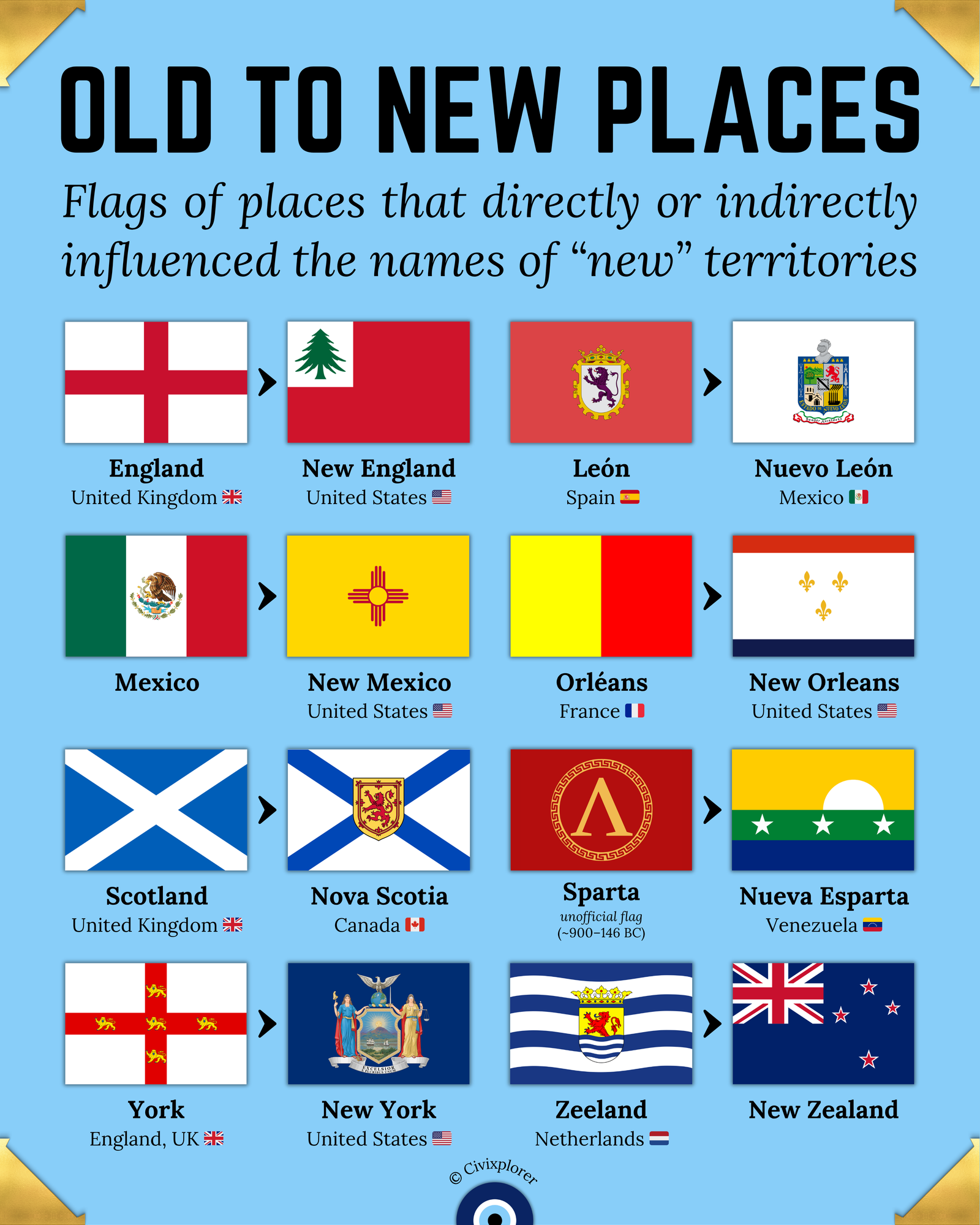
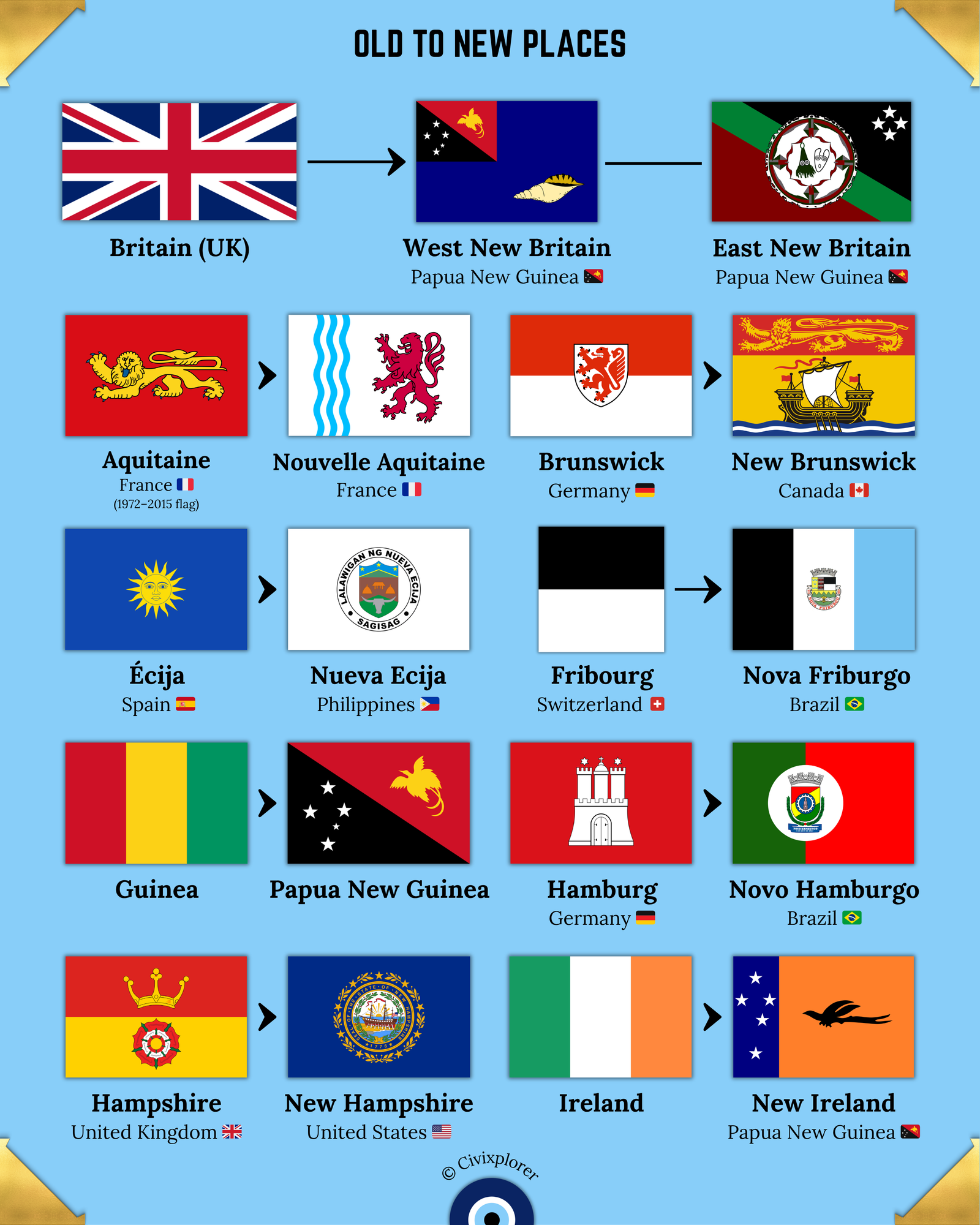
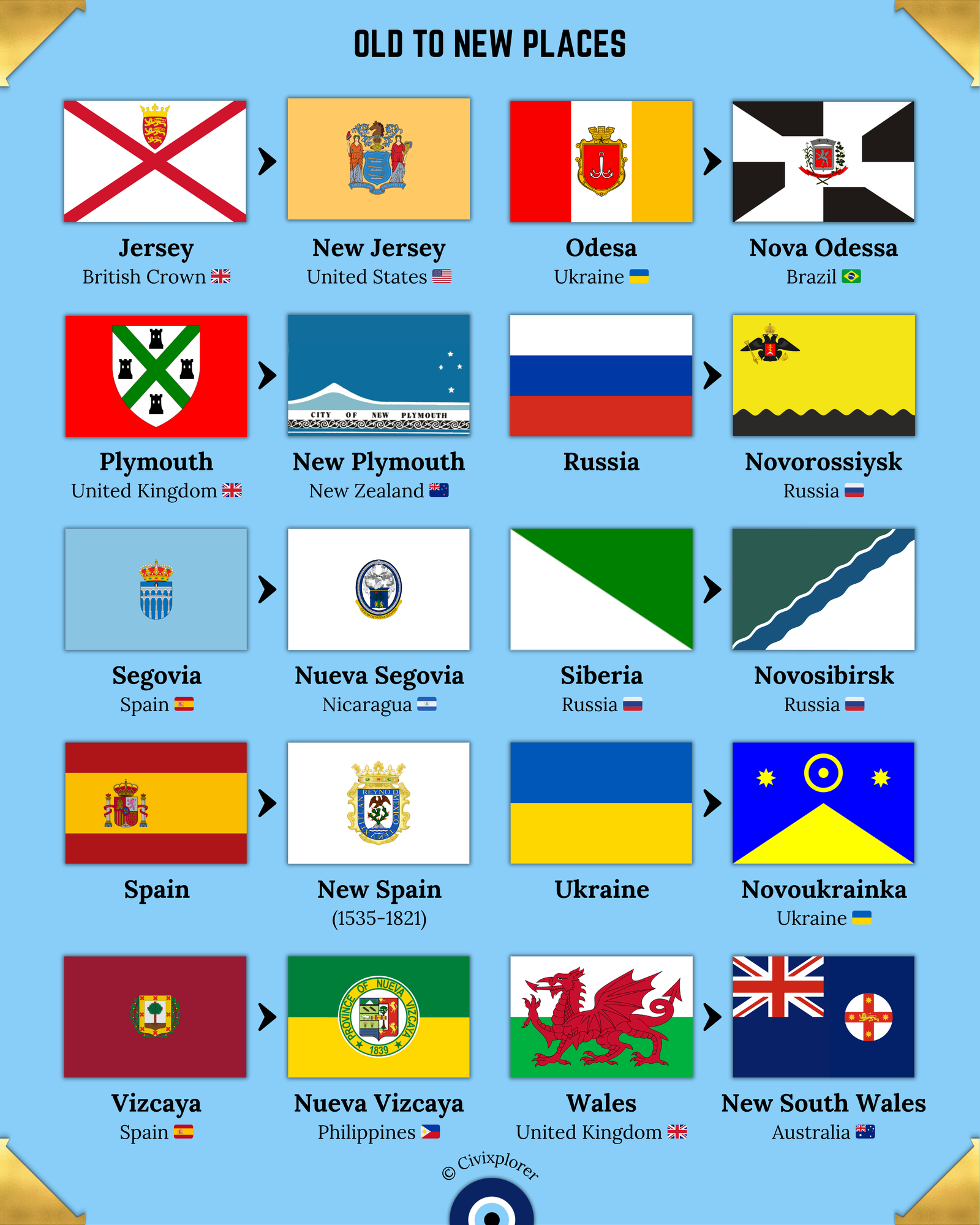
The names of places are far more than mere labels; they are historical fossils that reveal deep stories of empire, migration, and even legendary bravery. Across the globe, the prefix "New"—or its linguistic cousins like Nuevo, Nova, and Novo—marks a trail of human movement and perception that has shaped our modern world. By analyzing these naming conventions, we can categorize the origins of our most famous territories into five distinct historical narratives.
Colonial Claim-Staking and Psychological Comfort
The most common driver of "New" toponymy was European expansion between the 15th and 19th centuries. When empires like Britain and Spain settled unfamiliar lands, they used names from their homelands to project power and plant a symbolic flag in the ground. Territories like New Spain, New England, and New York served as legal claims for the crown. Beyond politics, these names provided psychological comfort to settlers facing harsh environments, offering a sense of continuity with the homes they left behind, such as New Plymouth or New Hampshire.
Immigrant Waves and Cultural Heritage
Not every "New" place was born of royal decree. Many were founded by immigrants seeking to preserve their cultural identity. In Brazil, 19th-century settlements like Nova Friburgo were established by Swiss families from the Canton of Fribourg, while Novo Hamburgo was built by German immigrants. These names represent community-driven nostalgia and the desire to maintain a connection to their ancestral roots amid economic hardship.
Visual Coincidences and Exploratory Perceptions
Occasionally, a name was chosen simply because a new land reminded an explorer of somewhere else. A prime example is Papua New Guinea. In 1545, Spanish explorer Yñigo Ortiz de Retez noted that the indigenous inhabitants resembled people he had seen on Africa's Guinea coast. This was not a colonial tie to Africa but a visual association that became a permanent fixture on the map.
Homage and Ideological Tributes
Some of the most unique names on Earth are symbolic tributes to legendary qualities. Nueva Esparta in Venezuela is a poetic example; it was named "New Sparta" not because of Greek colonization, but as an homage to the fierce bravery of its inhabitants during the Venezuelan War of Independence. Their resistance was so valiant it was likened to the warriors of Ancient Sparta.
Administrative Reorganization
Finally, "New" names can arise from modern political shifts rather than ancient voyages. France’s Nouvelle-Aquitaine region, created in 2016, is a result of merging several internal provinces. Whether through colonial conquest, immigrant hope, or modern restructuring, these names remind us that every map is a written record of human perception and historical events.
Comments (0)
Join the Conversation
Login to share your thoughts with the community.
Login to Comment