
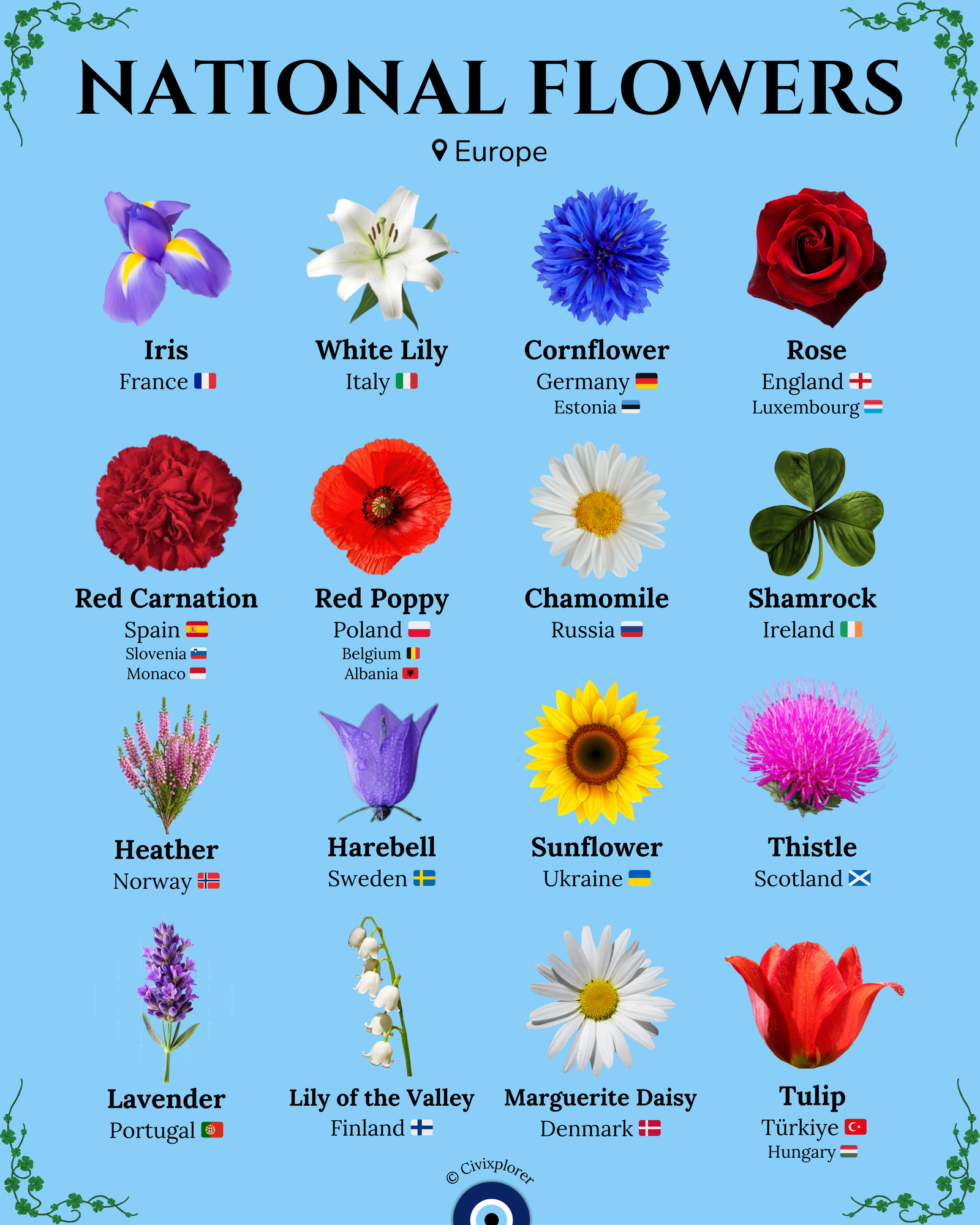
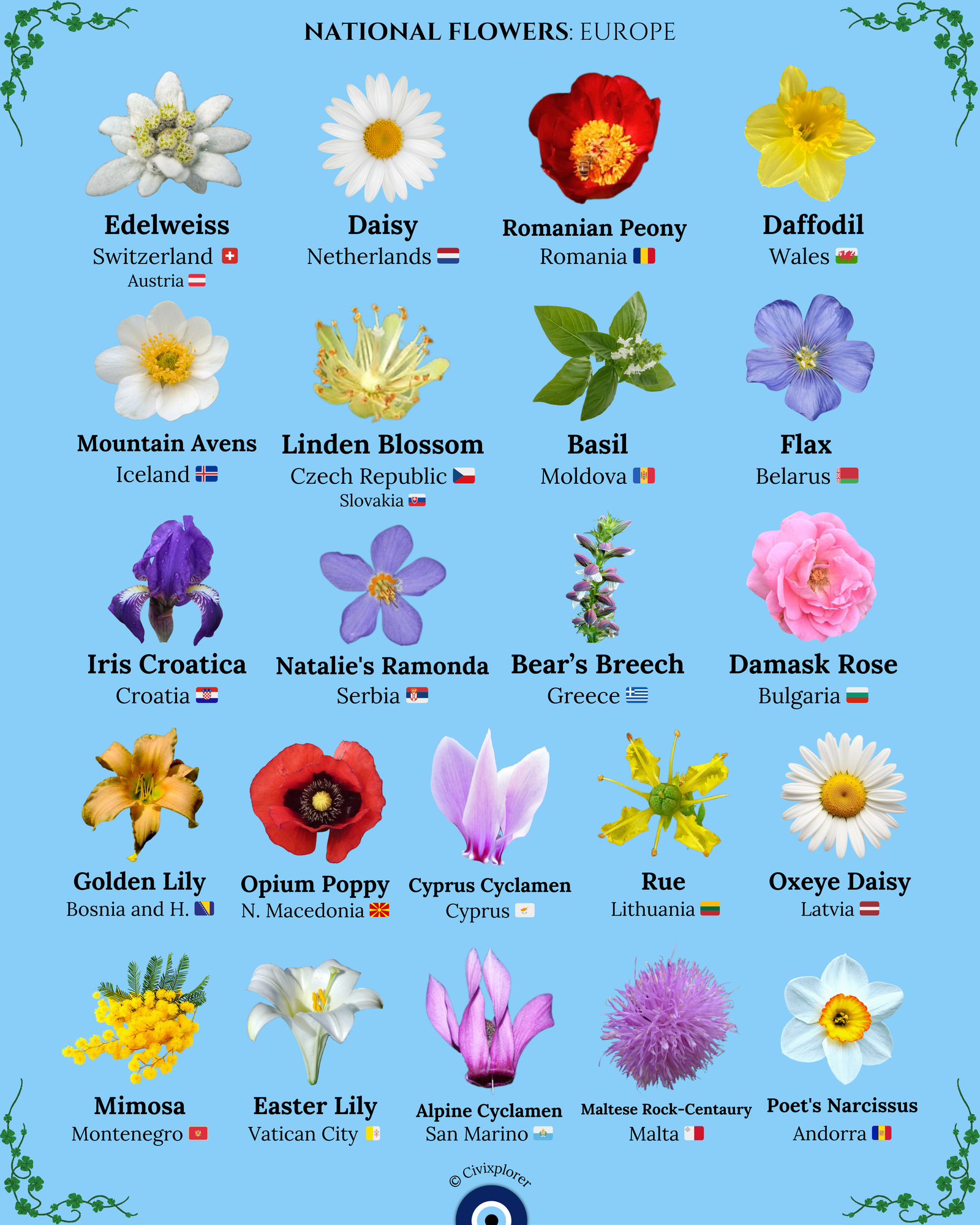
Across the European continent, the practice of floral emblemism serves as a colorful map of history, weaving together legends of survival, royal intrigue, and religious devotion. These national flowers are rarely chosen by accident; they often represent the "soul" of a nation or a pivotal moment in its struggle for identity.
One of the most poignant examples is the Cornflower, shared by Germany and Estonia. Its status in Germany traces back to a 19th-century tale of Queen Louise of Prussia, who hid her children in a field of cornflowers to keep them calm while fleeing Napoleon’s troops. In Estonia, its vibrant blue reflects the national flag and the sky above. Similarly, the Sunflower has transitioned from a vast agricultural staple to a global symbol of Ukrainian resistance and peace, representing the warmth of the sun and the resilience of its people.
Military history also blooms in the Red Poppy, a symbol of remembrance for Poland and Belgium. For Poland, it specifically honors the sacrifice of soldiers at Monte Cassino. In Scotland, the prickly Thistle became an enduring badge of defiant strength after a 13th-century legend claimed a barefoot Viking invader stepped on one, yelping in pain and alerting Scottish warriors to the surprise attack.
Religious and royal narratives are equally prominent. The Shamrock of Ireland was famously used by St. Patrick to explain the Christian Trinity to pagan converts, while the Iris of France—historically stylized as the Fleur-de-lis—is tied to King Clovis I and the ultimate symbol of French royalty. Even the Easter Lily of Vatican City carries deep theological weight, symbolizing purity and the Resurrection.
In the high-altitude terrain of the Alps, the Edelweiss represents "rugged survival" for Switzerland and Austria, standing as a protected species and an icon of Alpine culture. Moving north, the Lily of the Valley signifies the arrival of spring in Finland after harsh winters. Interestingly, some modern choices reflect the public's voice; the Netherlands recently saw the Daisy rise as a national favorite, representing modesty and the common beauty of the countryside over the more famous, but non-native, tulip.
These floral emblems remind us that nations often choose symbols that feel like home, turning humble wildflowers into powerful icons of national pride.
Comments (0)
Join the Conversation
Login to share your thoughts with the community.
Login to Comment