
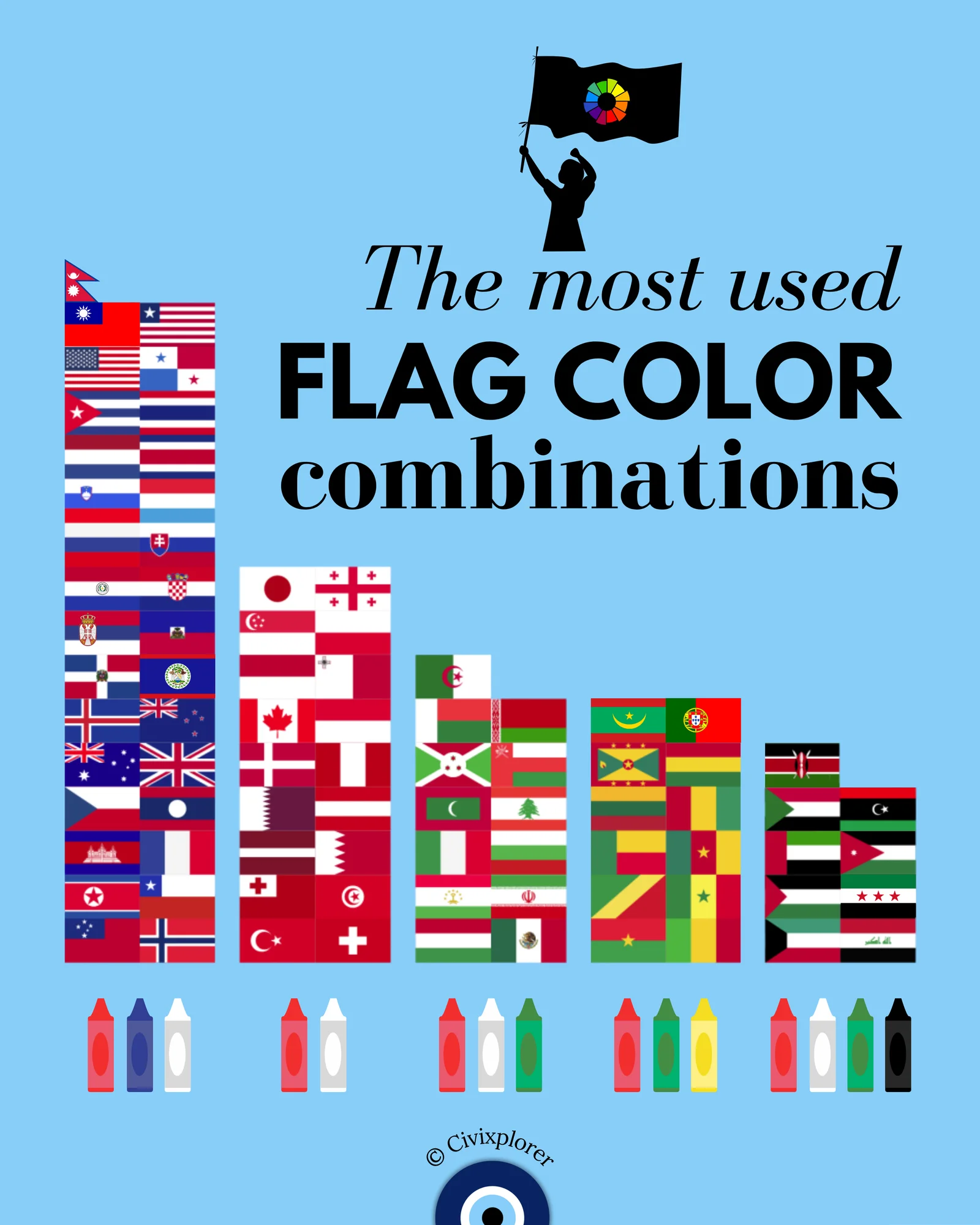
Vexillology is far more than just a study of symbols; it is a visual record of human history, migration, and revolution. When we look at the most common color palettes across the globe, we aren’t just seeing aesthetic choices—we are seeing the lasting footprints of empires and the birth of shared regional identities.
The most dominant trio in the world is the classic combination of red, white, and blue. This palette’s global reach was cemented primarily by the maritime dominance of 18th-century powers like France, the United Kingdom, and the United States. Beyond the West, this trio became the backbone of the Pan-Slavic movement, where nations such as Slovakia and Croatia drew visual inspiration from the flag of 🇷🇺 Russia to signal their cultural ties.
The pairing of red and white also holds a massive global footprint. This combination finds its roots in ancient European heraldry and the Danish Dannebrog, one of the oldest flags still in use. However, its influence extends deep into the Middle East and North Africa as a legacy of the Ottoman Empire, a history still visible today in the national colors of Tunisia and Qatar.
Beyond these traditional palettes, regional solidarity is vividly expressed through specialized color sets. The Pan-African palette of red, green, and yellow was inspired by Ethiopia, serving as a symbol of independence and unity for the continent. Similarly, the four-color Pan-Arab palette—red, white, green, and black—originated from the Great Arab Revolt. Each hue represents a different historical Islamic caliphate, weaving the shared heritage of the Arab world into a single visual identity. These colors prove that while every nation is unique, our flags often tell a story of connection.
Comments (0)
Join the Conversation
Login to share your thoughts with the community.
Login to Comment