
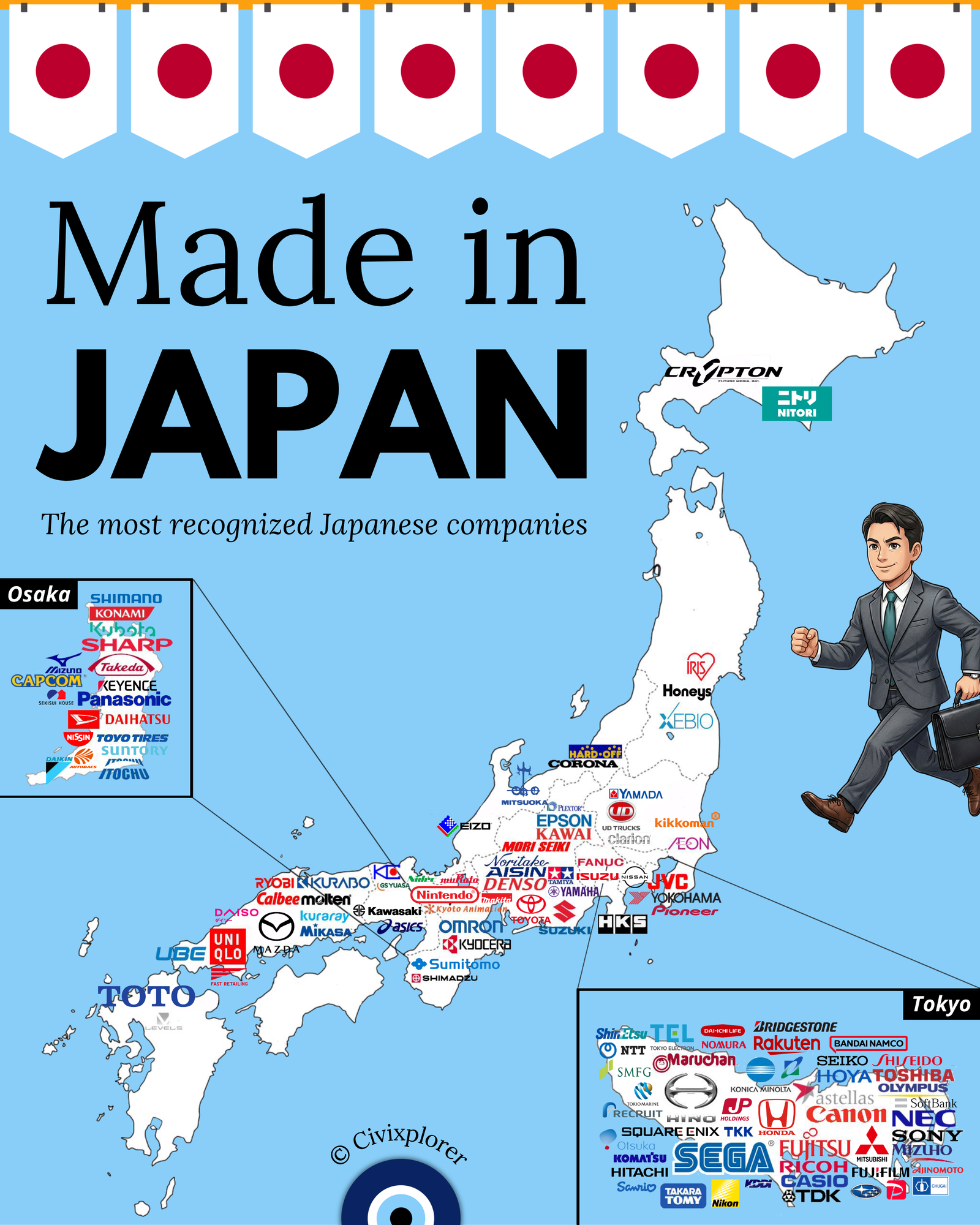
Japan’s industrial landscape is defined by a unique geographic concentration of corporate might. While the Greater Tokyo Area serves as the primary financial and political nerve center, the Kansai region—encompassing Osaka and Kyoto—remains a historic hub for trade and merchant innovation. This distribution highlights how a relatively small island nation transformed into a global economic powerhouse through highly specialized industrial clusters.
The foundation of this success lies in the post-war "economic miracle," which saw the rise of the keiretsu system. Replacing the pre-war zaibatsu monopolies, these interconnected business groups prioritize long-term stability and research over short-term profits. Through cross-shareholding and close ties with central banks, Japanese firms have been able to maintain a relentless focus on market share and technological dominance rather than immediate shareholder payouts.
Today, Japan remains an undisputed leader in precision manufacturing, robotics, and the automotive industry. Companies like Toyota and Honda pioneered the "kaizen" philosophy of continuous improvement, while "hidden giants" like Fanuc and Keyence provide the essential technology for global factory automation. Furthermore, cultural titans like Nintendo, Sony, and Capcom have established Japan as a supreme leader in the global entertainment and gaming sectors.
As of early 2026, the Japanese economy is navigating a period of modest growth rather than recession. While challenges such as an aging population and a fluctuating yen persist, corporate profits remain robust among these global giants. The enduring spirit of "monozukuri," or the art of making things, ensures that Japan’s corporate legacy continues to evolve and thrive on the world stage.

Comments (0)
Join the Conversation
Login to share your thoughts with the community.
Login to Comment