
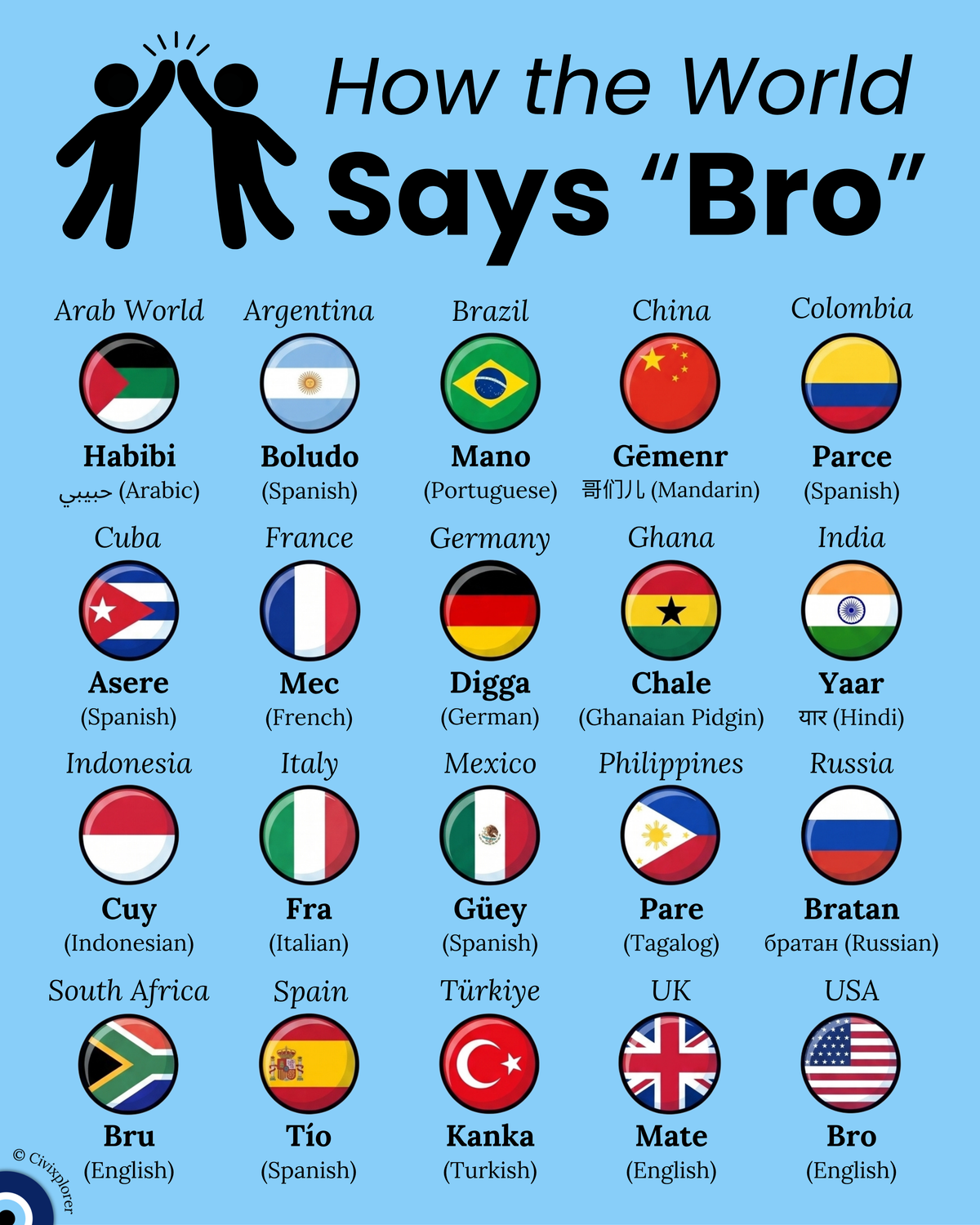
Across the globe, informal terms of address like the English word "bro" serve as powerful markers of peer solidarity, intimacy, and cultural identity. While the English term is a straightforward clipping of brother, cross-cultural analysis reveals that languages across six continents recruit vastly different etymological paths to express camaraderie.
A primary mechanism behind these informal terms is the extension of biological kinship words into broader social circles. In Portuguese, mano shortens irmão (brother), popular in urban Brazilian hip-hop culture, while Italian fra clips fratello. Russian bratan derives from brat to carry a street-level masculine camaraderie, and South African bru mirrors Afrikaans broer. Beyond immediate siblings, terms like Mandarin gēmenr build upon the concept of an older brother, while Spanish tío in Spain literally translates to "uncle," having underwent semantic bleaching during the late twentieth century to become a universal informal vocative for a peer.
Another intriguing linguistic phenomenon is dysphemistic camaraderie, where derogatory or taboo terms are transformed into affectionate greetings among close friends. Argentine boludo originally stemmed from an insult regarding foolishness, yet delivered with a relaxed intonation among trusted peers, it functions seamlessly as an intimate greeting. Similarly, Mexican güey evolved phonetically from buey (ox), morphing from a term mocking dullness into one of the most ubiquitous conversational markers in Latin America. In Europe, German digga derived from the Hamburg dialect pronunciation of Dicker (thick one), spreading through national youth culture as a staple address of urban solidarity.
Beyond kinship and reclaimed insults, informal address reflects deep historical trade, religious ties, and subcultural heritage. Arabic habibi translates literally to "my beloved," offering a tender expression of warmth used widely across social settings. In the Americas, Colombian parce and Tagalog pare both trace their origins back to the Spanish compadre (godfather), illustrating how historical institutions of co-fatherhood evolved into modern peer slang. Meanwhile, Cuban asere finds its roots in the sacred vocabulary of the Abakuá male mutual-aid society derived from West African Ékpè traditions, showing how diasporic heritage enriches daily street language. Ultimately, these terms highlight how every culture reimagines vocabulary to strengthen social bonds and celebrate everyday connection.

Comments (0)
Join the Conversation
Login to share your thoughts with the community.
Login to Comment