
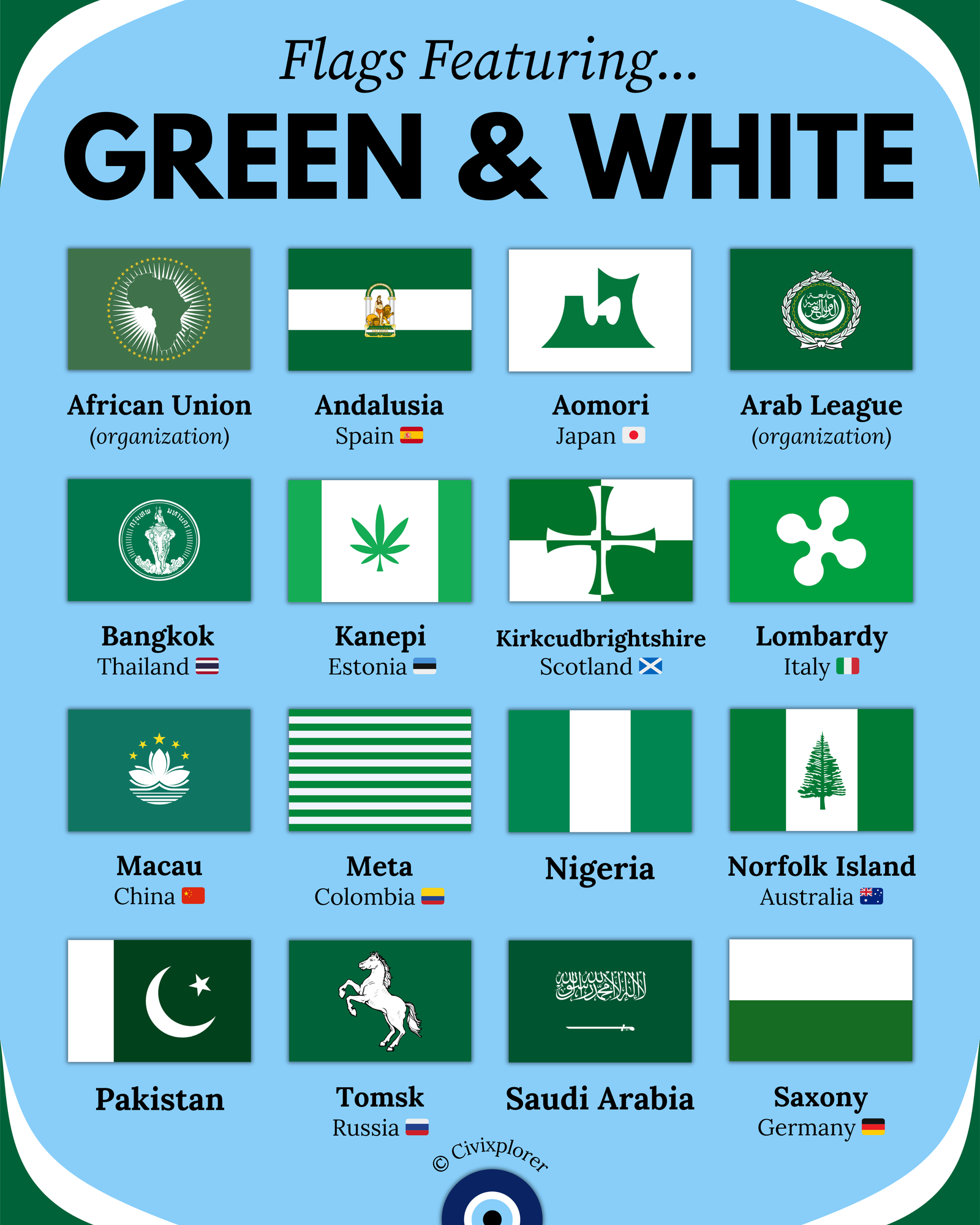
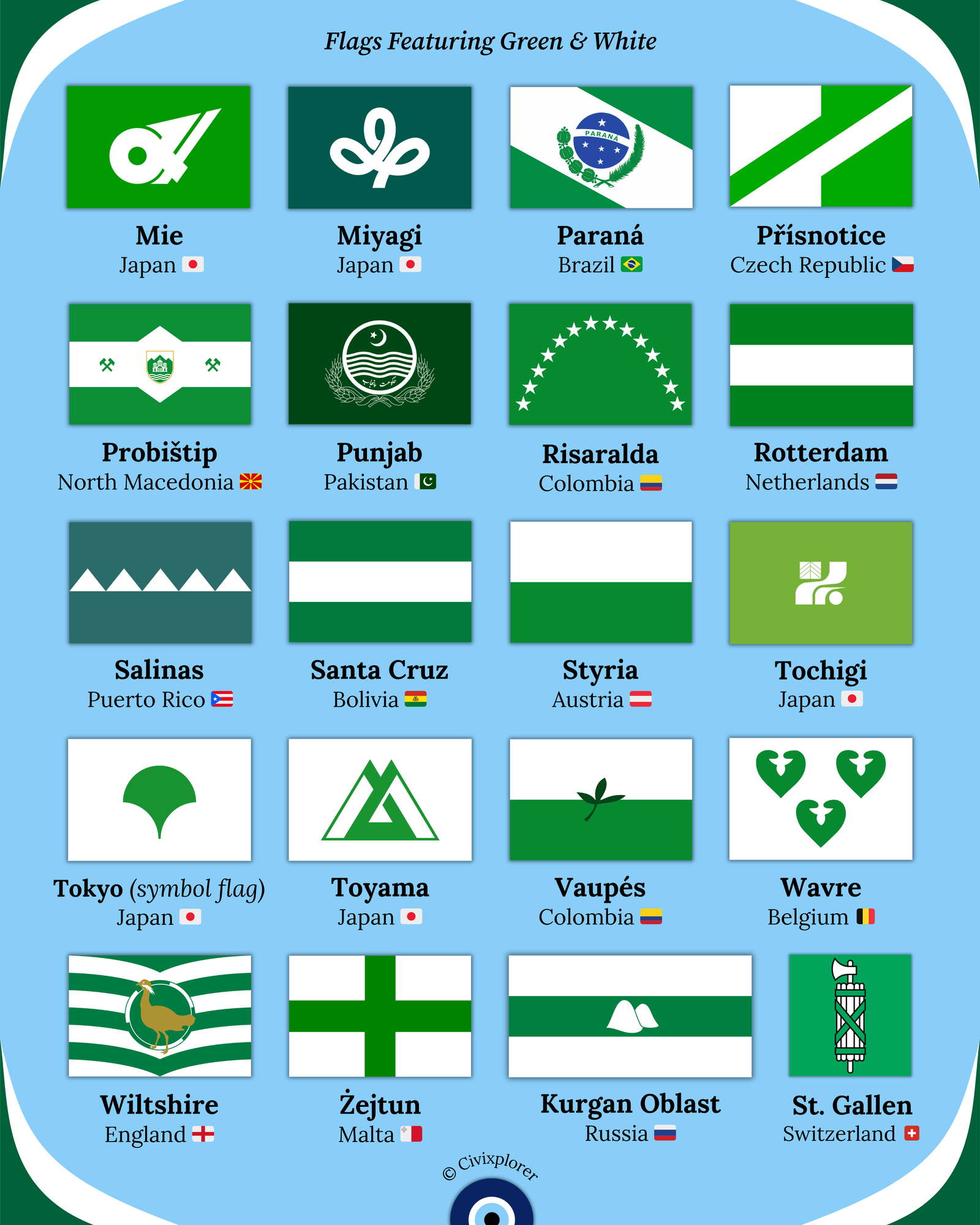
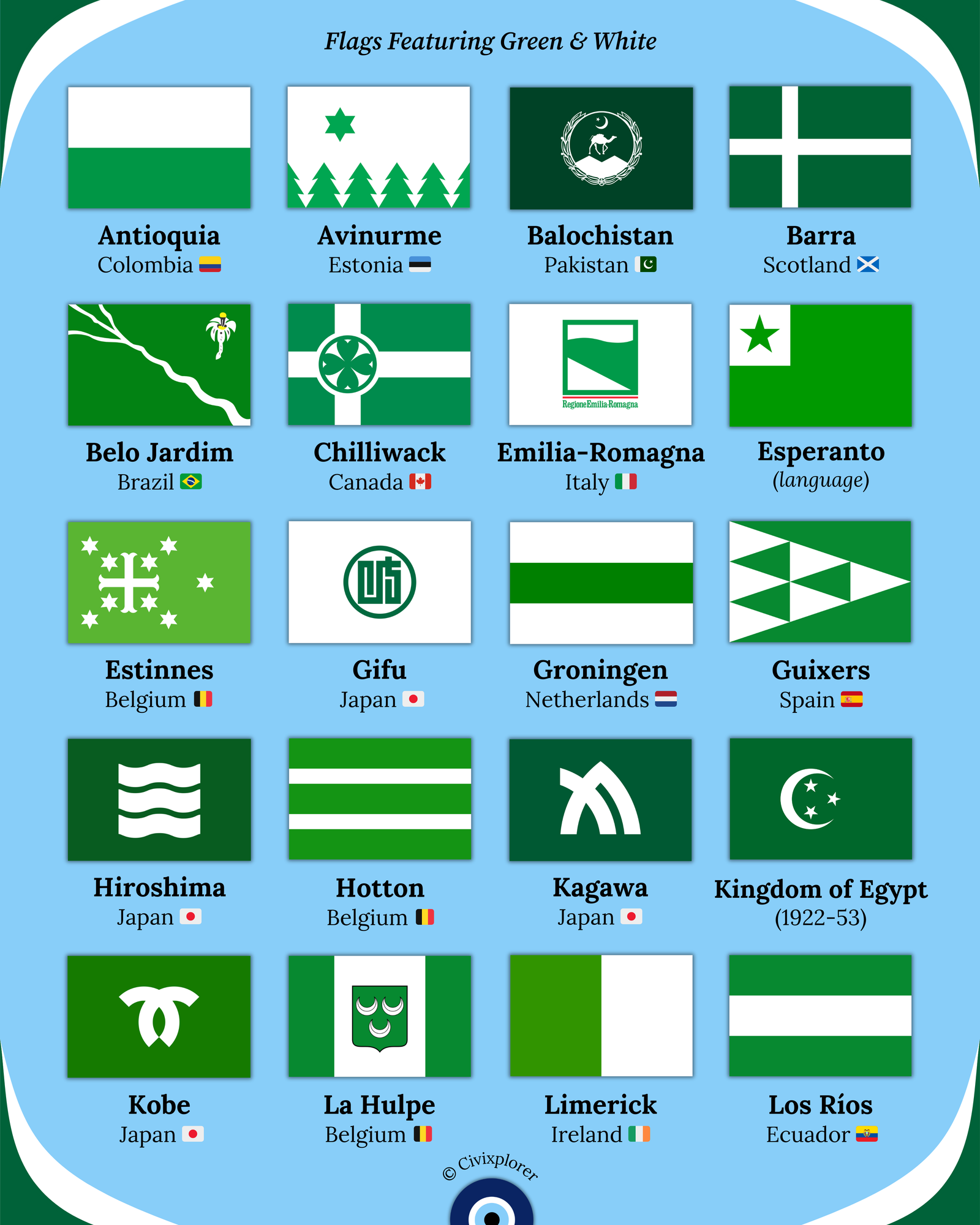
Across the study of vexillology, the combination of green and white stands out as one of the most balanced and meaningful palettes used by nations, regions, and organizations. Rather than being a mere coincidence, these colors are chosen to project prosperity without conflict, often representing a bridge between the natural world and human ideals.
The Spiritual and Cultural Weight of Green
In many contexts, green is the most expressive color on a flag. For many nations, it is deeply rooted in Islamic heritage, representing the color of paradise and the Prophet Muhammad’s banner. This is prominently seen in the flags of Saudi Arabia, Pakistan, and the Arab League. Beyond religion, green almost universally symbolizes nature, fertility, and agriculture. On the flag of Nigeria, the green stripes represent the country’s vast natural wealth, while on the Andalusia flag, they represent hope and the region’s fertile lands.
White: The Symbol of Peace and Inclusion
White is typically used to provide high contrast while introducing themes of purity, harmony, and unity. In Nigeria, the central white stripe signifies peace flowing between the country’s agricultural wealth. One of the most significant uses of white is found in Pakistan’s flag, where the vertical white stripe was specifically designed to represent religious minorities, symbolizing a national commitment to tolerance and inclusion. In colder climates, such as the Russian region of Kurgan Oblast, white literally represents the snow and ice of the local geography.
The Japanese Minimalist Tradition
A fascinating aspect of this color palette is its massive presence in Japanese prefectures and cities. Flags for places like Tokyo, Aomori, and Gifu favor clean, bi-color designs that resemble modern corporate logos. These are actually stylized versions of traditional family crests known as mon. In these designs, green usually represents environmental harmony and local forests, while white creates a sense of peaceful contrast and honesty.
Global Curiosities and Unique Identites
The collection also includes intriguing standouts like the flag of Kanepi, Estonia, which features a cannabis leaf. This is not a modern statement but a nod to the town's history, as its name is derived from the word for hemp, a historically vital crop for the region. Additionally, the Esperanto flag uses a green star on a white field to represent the five inhabited continents united in a hope for global understanding.
Whether representing the lush landscapes of Norfolk Island or the pan-Arab solidarity of the Arab League, the green and white duo continues to be a powerful tool for visual storytelling across the globe.
Comments (0)
Join the Conversation
Login to share your thoughts with the community.
Login to Comment