
The global energy transition has sparked a new race for resources, transforming specific minerals into the "new oil" of the 21st century. These elements are the backbone of modern technology, powering everything from electric vehicle (EV) batteries to high-tech defense systems and renewable energy infrastructure.
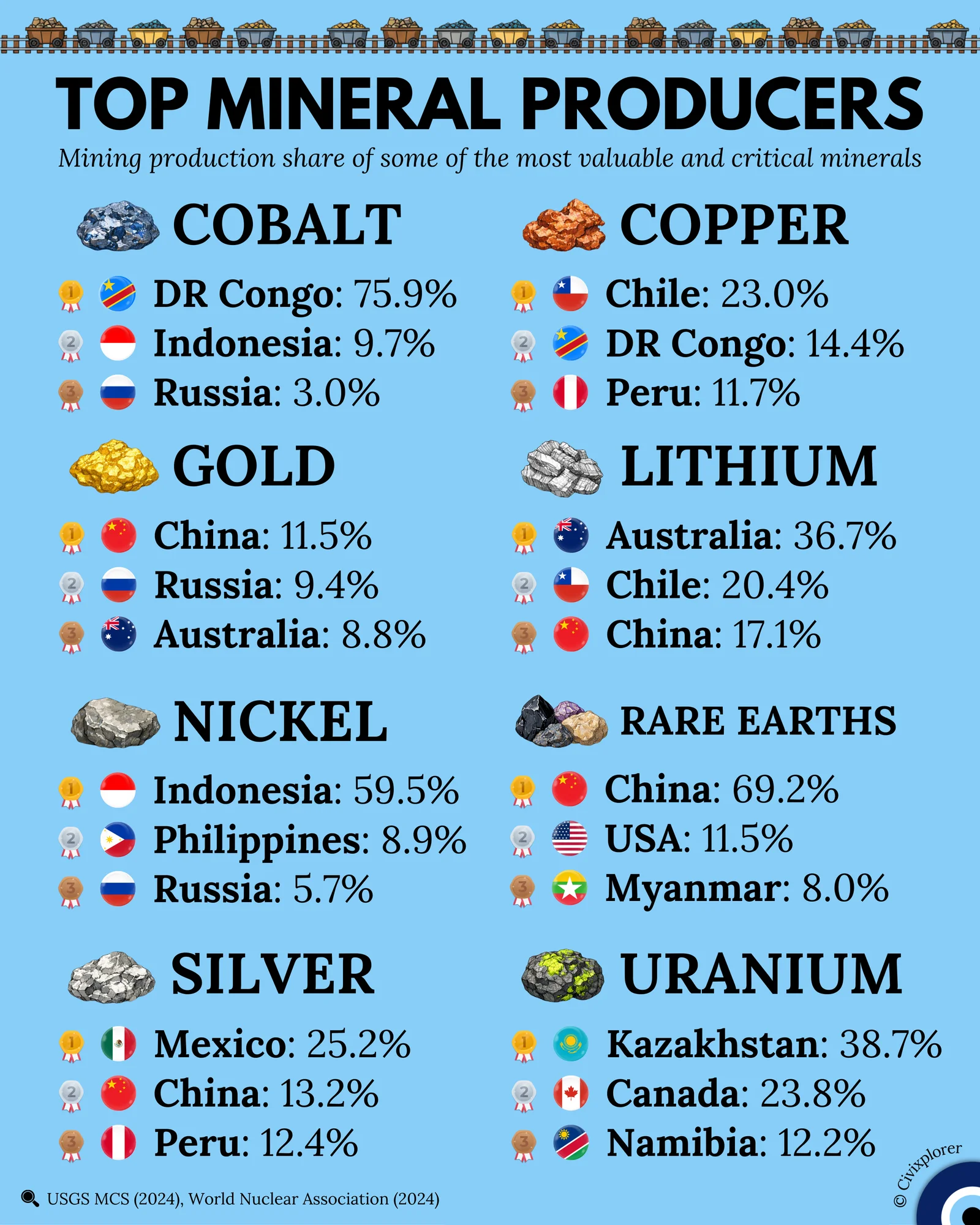
The current distribution of these resources is a result of geological luck combined with aggressive industrial policy. China stands as a multi-mineral powerhouse, appearing in nearly every production category. This dominance isn't just about extraction; China has spent decades investing in the midstream refining and processing of minerals, even those mined in other regions like the Democratic Republic of the Congo.
While China leads in processing, other nations have become specialized pillars of the global supply chain. The DRC currently holds over 70% of the world’s cobalt supply, a critical by-product for high-density batteries. Similarly, Indonesia has surged as a nickel powerhouse by implementing strategic bans on raw ore exports, forcing international companies to build refineries within its borders. In the "Lithium Triangle" and beyond, Chile and Australia remain the primary providers of the lithium required for the EV revolution.
Interestingly, major western powers like the United States and Europe face significant strategic vulnerabilities. While the U.S. possesses significant deposits of lithium and copper, it faces heavy regulatory hurdles and a lack of domestic processing facilities, often sending its own ore abroad for refinement. Europe remains almost 100% dependent on imports due to depleted reserves and strict environmental laws, creating a "Green Paradox" where ambitious climate goals are hindered by the difficulty of opening new domestic mines.
As we move toward 2030, the demand for copper—the "metal of electrification"—and rare earths for wind turbines is projected to grow exponentially. Understanding who controls these "dirt-to-magnet" pipelines is essential for navigating the geopolitical and environmental landscape of the coming decade.
Comments (0)
Join the Conversation
Login to share your thoughts with the community.
Login to Comment