
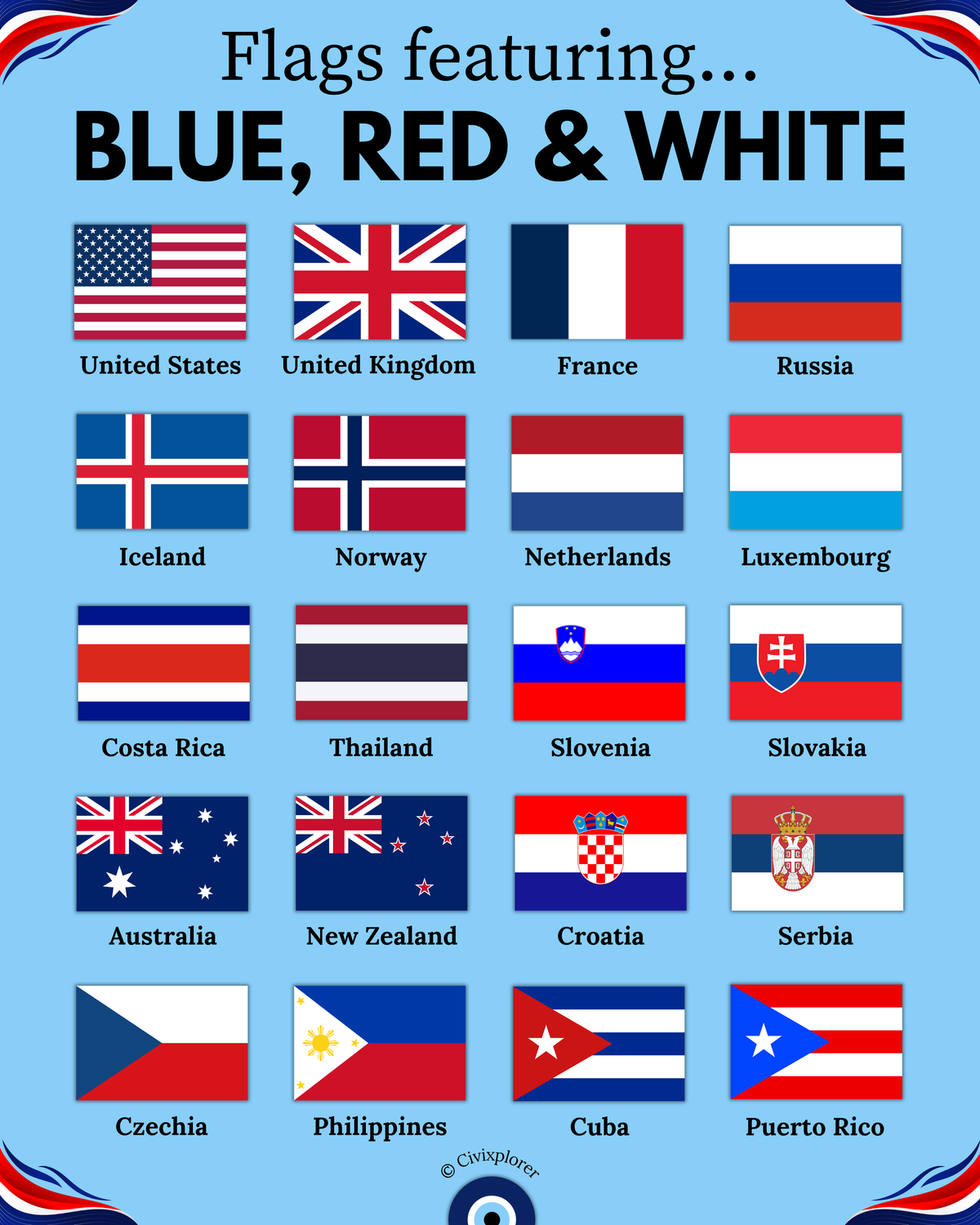
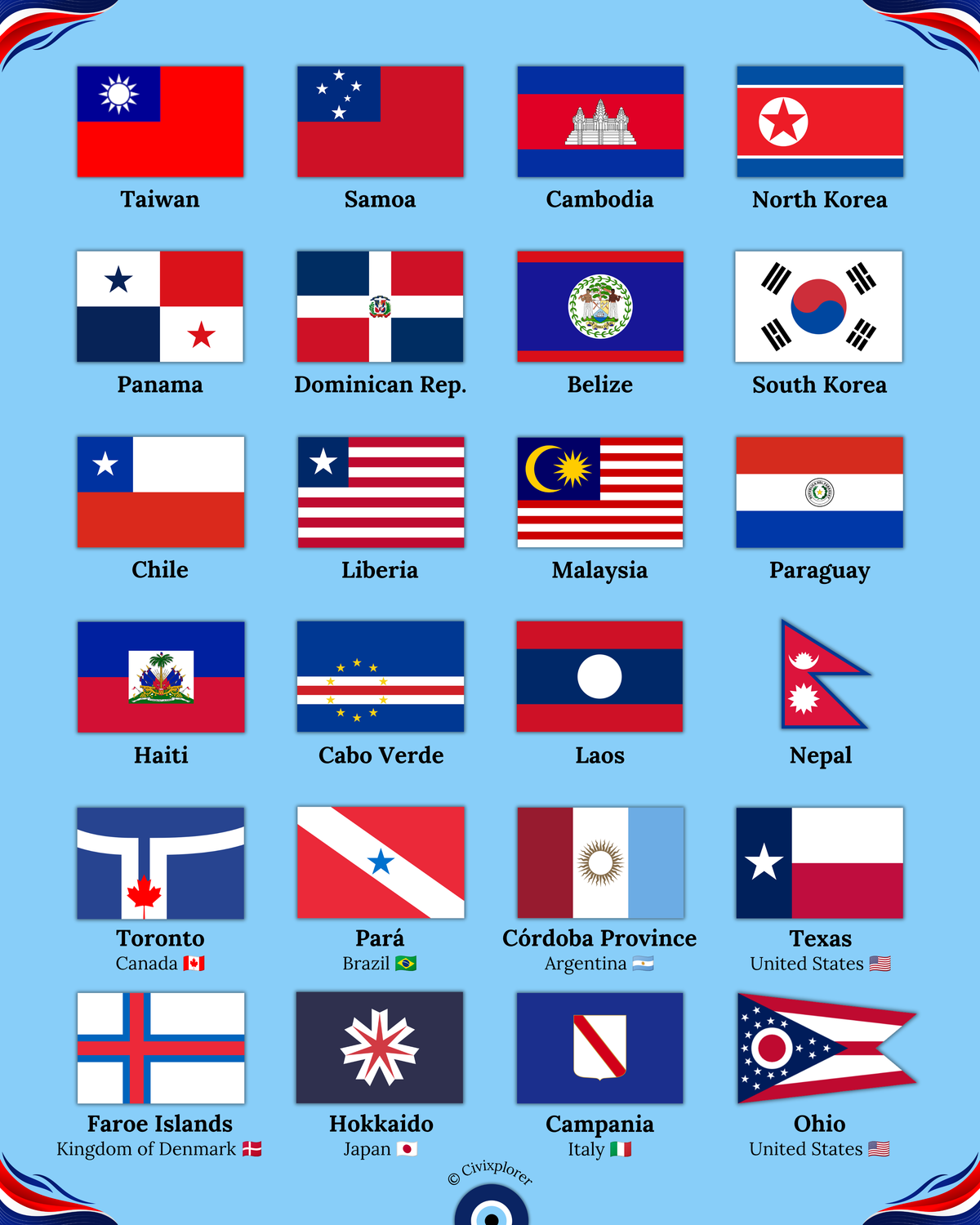
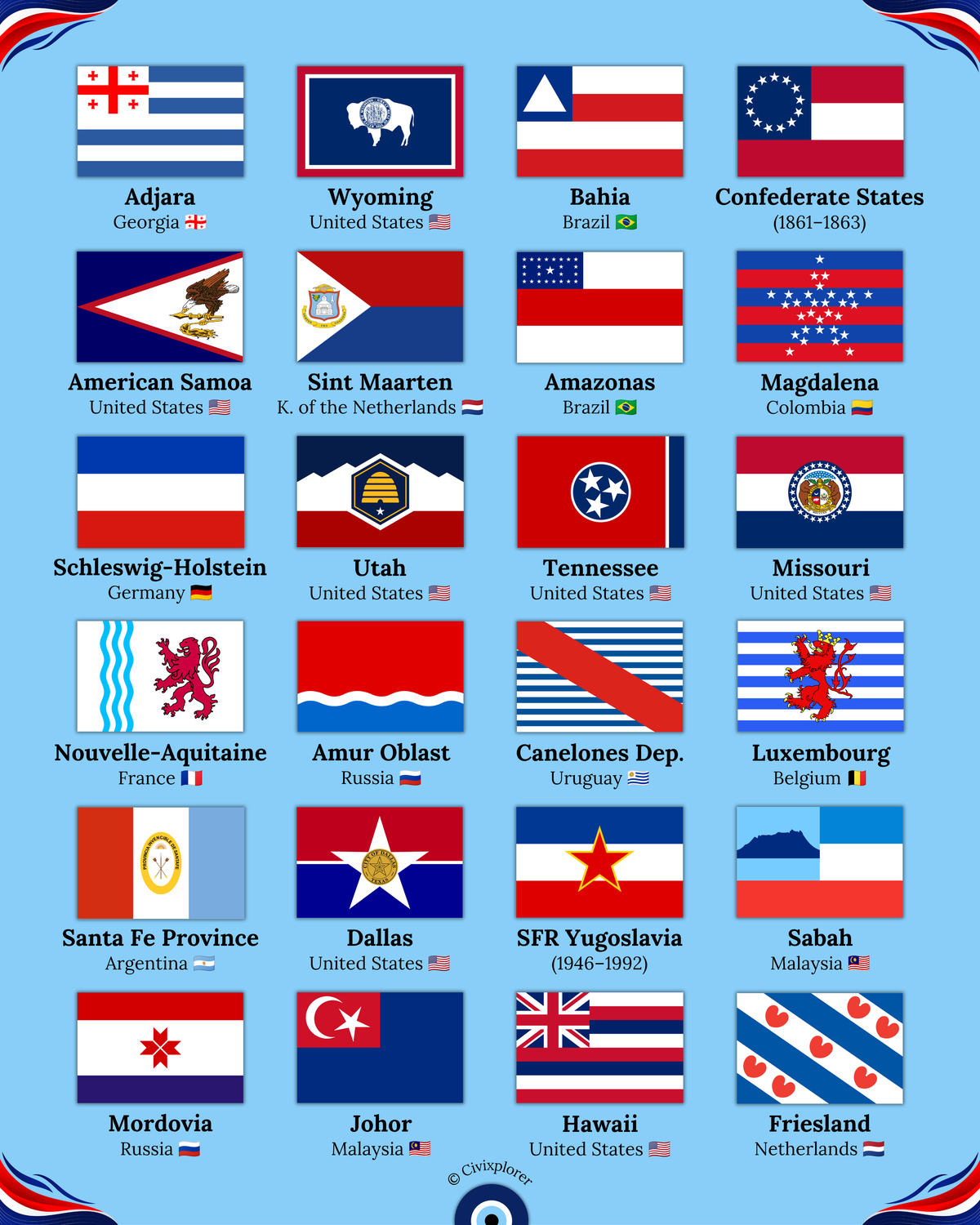
The blue, red, and white combination is arguably the most dominant color palette in modern vexillology. Walk through any international gathering, and you will see these three hues fluttering side by side on dozens of national and regional banners. While these colors are often associated with universal values like courage, peace, and unity, there is actually no single, universal meaning behind them. Instead, the incredible popularity of this color triad is the result of a fascinating mix of practical chemistry, maritime history, and political emulation that shaped the modern world.
Before the age of synthetic manufacturing, the dominance of red, white, and blue was heavily driven by practical dye accessibility. Creating a flag that was durable and highly visible at sea or on a battlefield was a major technical challenge. Fabric makers favored white because it required only simple bleaching, while vibrant reds and deep blues were derived from highly stable, colorfast, and relatively affordable natural sources like madder root and indigo. These colors offered high contrast under the traditional rules of heraldry and remained bright under harsh maritime conditions, unlike fragile greens or costly, fast-fading purples.
This practical chemistry quickly merged with naval power during the sixteenth century when the Dutch Republic introduced a horizontal tricolor that became a global icon of commerce and independence. Originally featuring orange, white, and blue, the orange stripe was eventually replaced by red to improve durability and visibility at sea. Because of the Netherlands' status as a global maritime superpower, this horizontal layout was emulated worldwide. Tsar Peter the Great of Russia, after studying Dutch shipbuilding in the late seventeenth century, adopted a similar white, blue, and red horizontal tricolor. This design would go on to supply the basis for the Pan-Slavic colors adopted at the 1848 Prague Slavic Congress, uniting the flags of Eastern European nations like Serbia, Slovakia, Slovenia, Croatia, and Czechia under a shared identity.
Beyond naval dominance, political revolutions cemented these colors into the global consciousness as primary symbols of liberty, democracy, and republicanism. The French Revolution of 1789 combined the royal white of the monarchy with the blue and red of Paris to create the famous vertical tricolor, symbolizing a new era of citizenship. This revolutionary design deeply influenced other nations, such as Costa Rica, which adopted a central red stripe and outer blue and white bands to reflect admiration for French republican ideals rather than any colonial connection. In the Atlantic world, the American Revolution of 1776 transformed these colors into a symbol of independence, inspiring a pattern of direct emulation. Liberia, founded in 1822 as a settlement for freed African-American slaves, adopted a flag that deliberately mirrors the American design, while Cuba and Puerto Rico utilized a singular star and bold stripes—a layout designed by nineteenth-century exiles to symbolize their own anti-colonial struggles.
Yet, within this sea of red, white, and blue, certain flags stand out as remarkable design outliers that defy traditional norms. Nepal boasts the world's only non-quadrilateral national flag, consisting of two stacked triangular pennants representing the peaks of the Himalayas, decorated with white celestial emblems. In the United States, the state flag of Ohio breaks standard rectangular boundaries with a unique swallowtail design inspired by traditional cavalry guidons. Even when countries share this color scheme, their internal meanings remain intensely unique. Thailand’s five-striped flag represents the "nation-religion-king" triad, while North Korea’s red star and bold bands are rooted in twentieth-century socialist traditions. Ultimately, these flags form a diverse visual family, showing how a handful of simple, durable colors can tell a thousand different historical stories.

Comments (0)
Join the Conversation
Login to share your thoughts with the community.
Login to Comment