
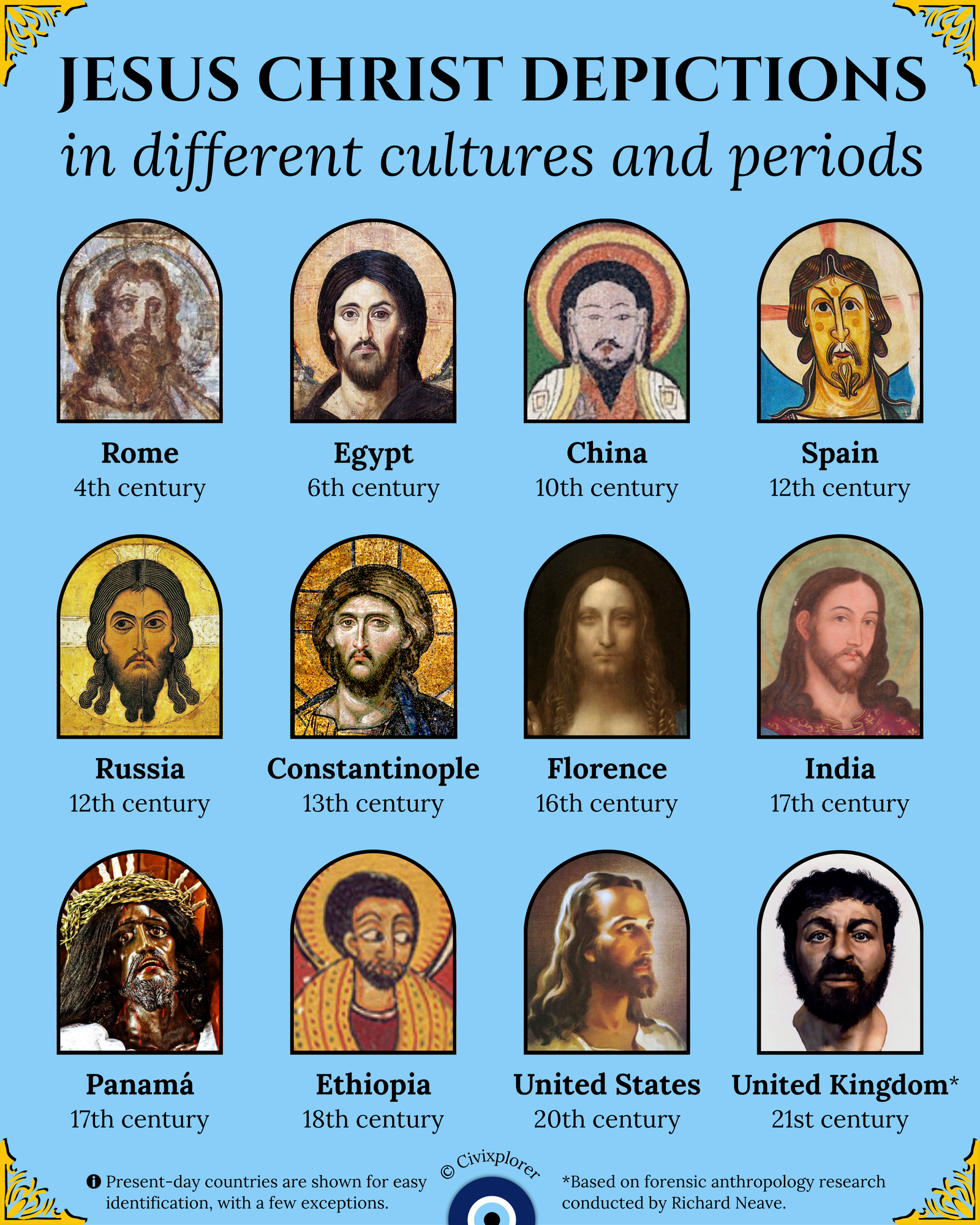
The history of Christian art reveals a fascinating phenomenon: the near-total absence of any verifiable description or portrait of Jesus. This lack of a physical record allowed artists across centuries and continents to portray him using the facial features, clothing, and artistic conventions of their own cultures. This process, known as inculturation, ensured the Christian message felt native and relatable rather than foreign, allowing different communities to make the divine feel deeply connected to their own lived experiences.
One of the earliest attempts to standardize his appearance occurred in 6th-century Egypt. The Christ Pantocrator icon at St. Catherine's Monastery established the "standard" Byzantine look—featuring long hair, a beard, and a solemn expression—that influenced centuries of subsequent religious art. However, as the faith spread along trade routes, so did its visual identity. In 10th-century China, depictions blended Christian iconography with indigenous aesthetics, showing Jesus with East Asian features and traditional robes, proving that early global trade carried ideas just as much as goods.
The Renaissance in Florence marked another significant shift, prioritizing humanism, ideal proportions, and technical mastery over everyday realism. By the 20th century in the United States, mass production through works like Warner Sallman’s Head of Christ profoundly shaped the modern Western cultural memory of Jesus through the sheer power of commercial printing. Meanwhile, in Panama, the 17th-century Cristo Negro (Black Christ) of Portobelo became a powerful symbol of identity and resistance for Afro-Panamanians, who saw their own struggles reflected in the dark-skinned, suffering figure.
Modernity has brought a final, radical shift in perspective. In 2001, a forensic reconstruction created in the United Kingdom utilized 1st-century Semitic skulls and anthropological data to recreate what a typical man from Galilee might have actually looked like. This scientific approach would call into question centuries of cultural projection, reminding us that the historical Jesus was a Middle Eastern man, perhaps quite different from the portraits that have dominated Western art for centuries. What is your opinion?
Comments (0)
Join the Conversation
Login to share your thoughts with the community.
Login to Comment