
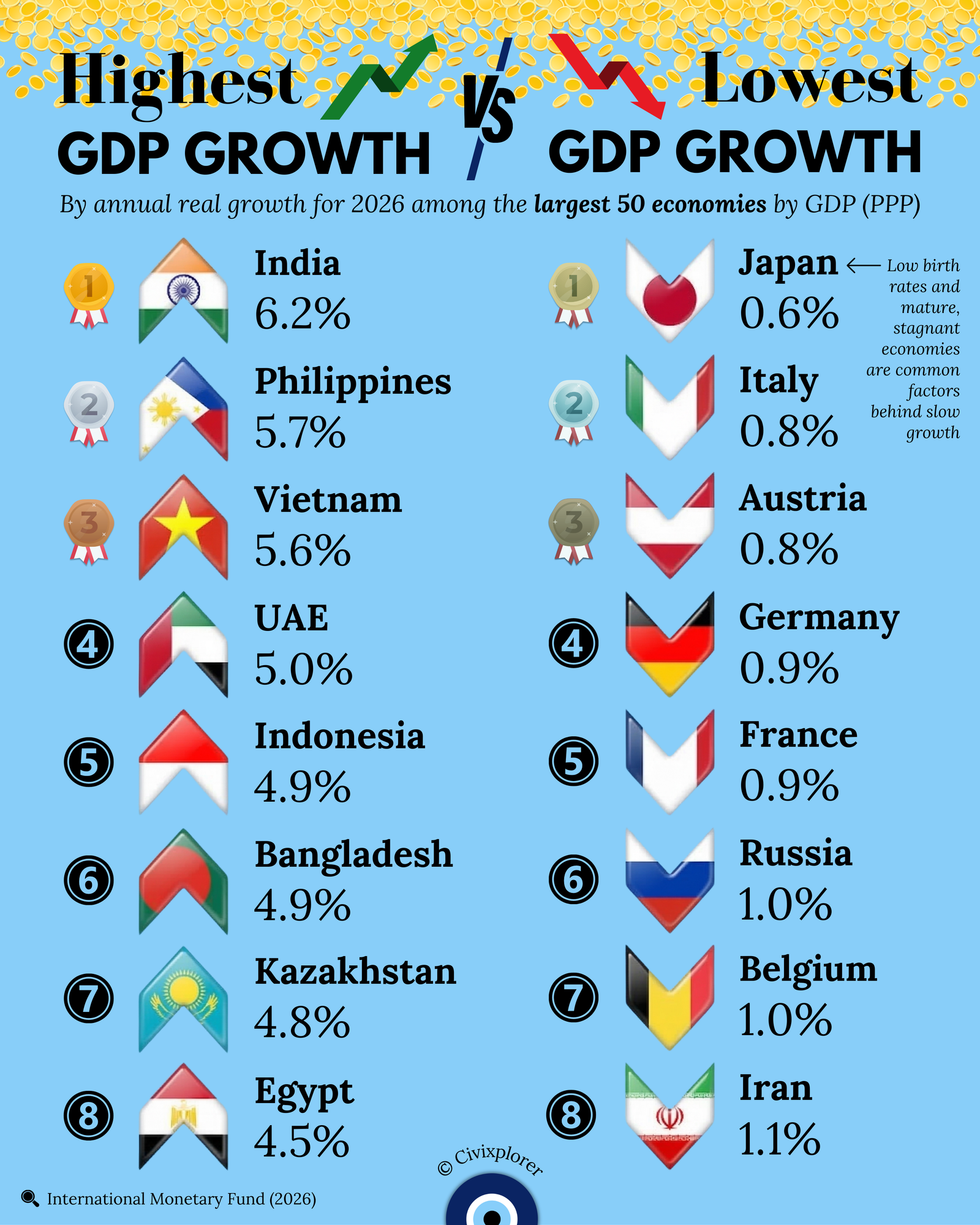
The global economic landscape is set for a significant transformation by 2026, characterized by a stark divergence between the world’s largest economies. Based on data from the International Monetary Fund (IMF), this shift is best understood through annual real GDP (PPP) growth. This metric is the gold standard for international comparisons because it adjusts for inflation (real) and levels the playing field by accounting for the cost of living in different nations (PPP: Purchasing Power Parity).
The Rise of Emerging Asia
The most striking trend in the 2026 forecast among the world's 50 largest economies is the dominance of South and Southeast Asian nations. India leads the pack with a projected 6.2% growth, followed closely by the Philippines (5.7%) and Vietnam (5.6%). These countries are benefiting from a "catch-up effect," where rapid industrialization and infrastructure development yield massive returns on investment. Furthermore, the "China Plus One" strategy is driving global corporations to diversify their supply chains, funneling significant foreign direct investment into these high-growth corridors. Indonesia and Bangladesh, both projected at 4.9%, further cement the region's role as the primary engine of global expansion.
The Demographic Anchor on Mature Economies
In contrast, advanced economies are facing a period of relative stagnation. Japan (0.6%), Italy (0.8%), and Germany (0.9%) sit at the bottom of the growth rankings. The primary culprit is a demographic crisis; rapidly aging populations and low birth rates result in a shrinking workforce, which acts as a heavy anchor on consumer spending and production. Additionally, these mature markets have already achieved high levels of infrastructure, meaning further growth must come from technological innovation and productivity gains, which are far more difficult to sustain than the initial bursts seen in developing nations.
Geopolitics and Structural Challenges
Beyond demographics, specific regional hurdles are shaping the 2026 outlook. European nations like France (0.9%) and Austria (0.8%) continue to grapple with elevated energy costs and the structural transition of major industries, such as the automotive sector’s shift to electric vehicles. Meanwhile, nations like Russia (1.0%) and Iran (1.1%) face limited growth due to international sanctions that curb investment and restrict access to global financial markets.
Ultimately, the 2026 projections illustrate a shifting center of economic gravity. While advanced economies focus on maintaining high living standards amidst structural headwinds, younger, industrializing nations are rapidly closing the gap and defining the future of global trade.
Comments (0)
Join the Conversation
Login to share your thoughts with the community.
Login to Comment