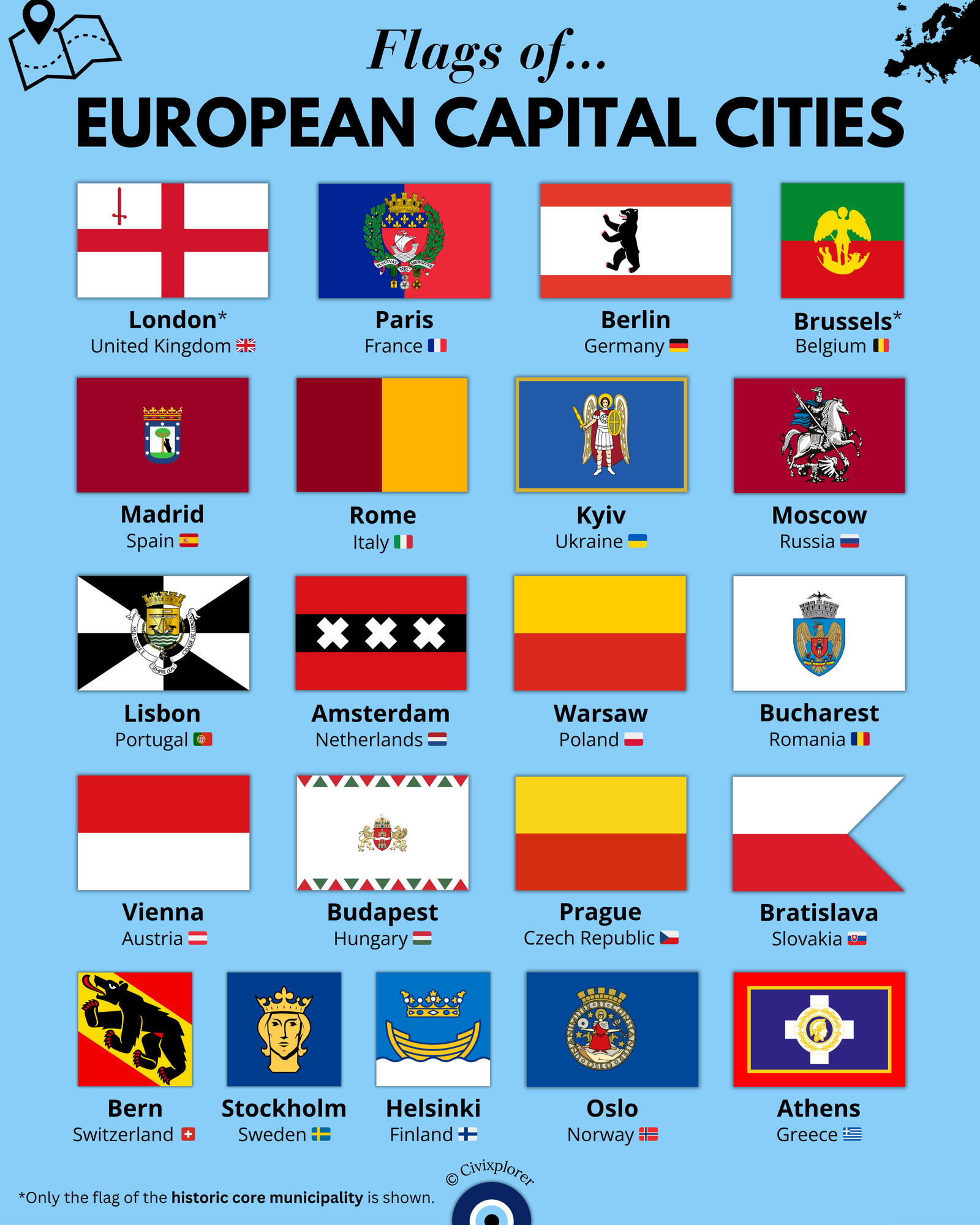
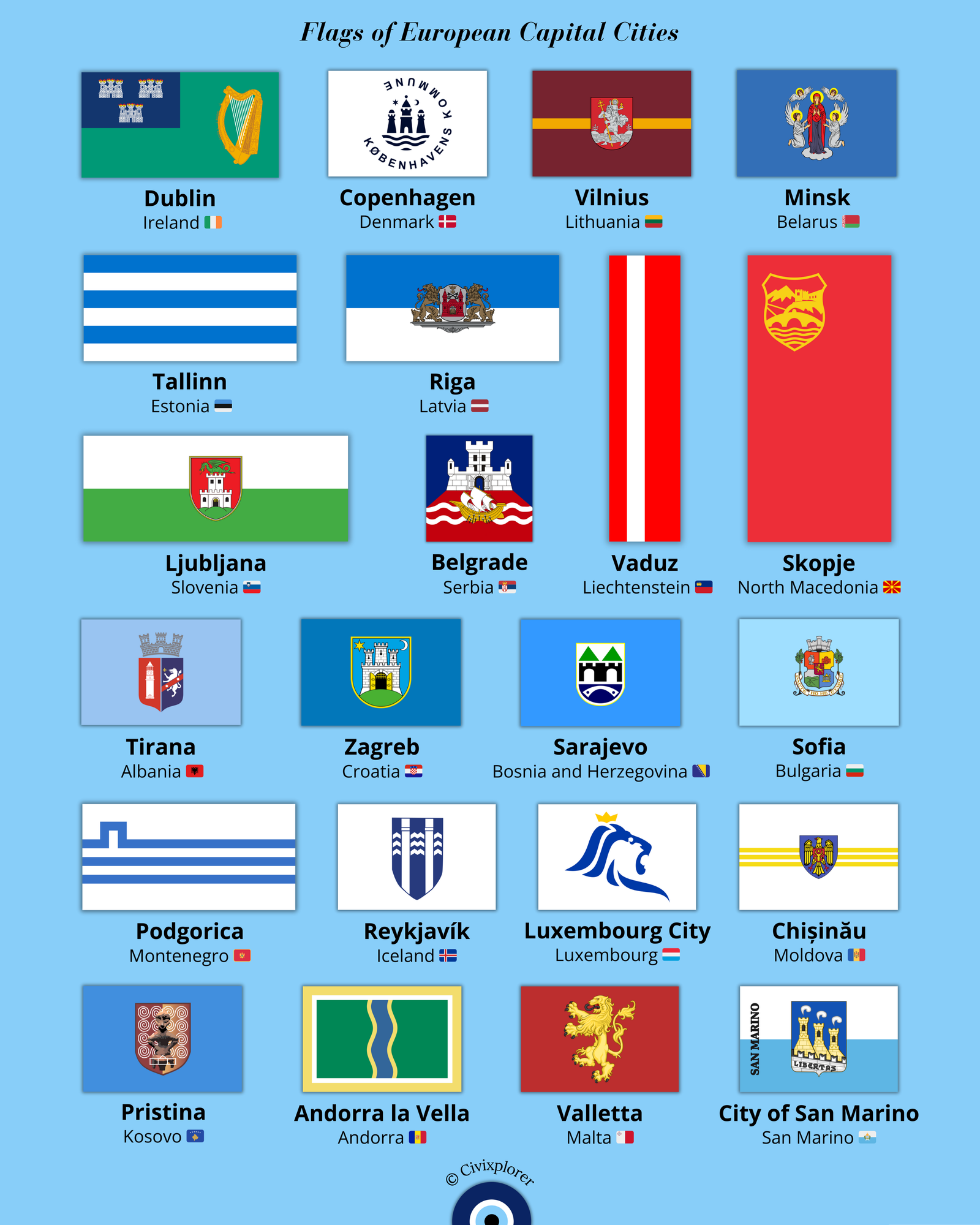
While national flags often dominate the public eye, municipal flags offer a fascinating, hyper-local look at the continent's history. These civic banners act as colorful time capsules of medieval heraldry, local legends, and civic pride. Unlike national banners, these designs are almost all genuine municipal heraldry—coats of arms turned into banners—that date back to medieval times, granted by kings or dukes.
Heraldry and Patron Saints
Many of these flags frequently invoke religious protectors. For instance, the flag of Moscow features St. George slaying the dragon, a symbol used since the Middle Ages. Similarly, Kyiv displays the Archangel Michael, the city's patron saint, holding a flaming sword and shield. These choices keep centuries-old legendary protectors alive in everyday civic symbolism.
Visual Puns and Local Legends
Some flags use "canting" arms—visual puns where the symbol sounds like the city's name. A prominent example is the black bear found on the flags of both Bern and Berlin. In Bern, local legend says the city was named after a bear caught by the founder, while Berlin’s bear has appeared on city seals since the 13th century, possibly as a pun on the German word Bär.
The Power of Simplicity
Striking, simple designs often make for the most memorable civic symbols. The flag of Amsterdam, featuring three white St. Andrew's crosses, is widely considered one of the best in the world. While rooted in 13th-century arms, locals often associate the crosses with warding off the city's historic threats: fire, flood, and plague.
Unique Formats and Historic Distinctions
Vexillology in Europe also includes unusual formats, such as the vertical flags of Vaduz and Skopje, which follow a long-standing Central and Eastern European tradition. Furthermore, it is important to note that flags like those of London and Brussels represent the "historic core" of the city rather than the entire modern metropolitan area, highlighting how ancient municipal boundaries persist today.
Comments (0)
Join the Conversation
Login to share your thoughts with the community.
Login to Comment