
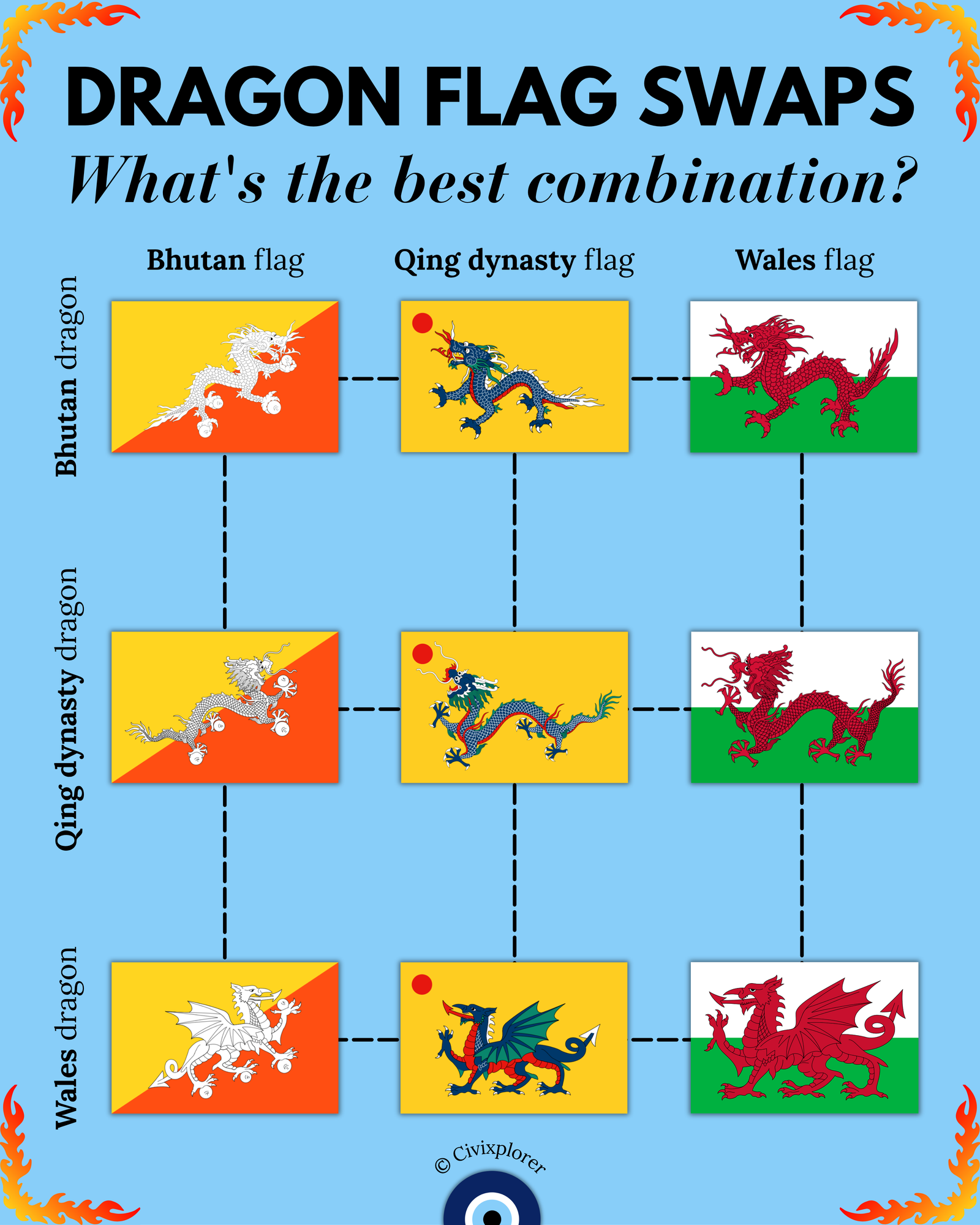
The concept of the dragon is one of the few truly universal mythological symbols, yet its interpretation varies wildly across the globe. This is best illustrated through vexillology, the study of flags. By looking at a visual matrix of "Dragon Flag Swaps," we can deconstruct how the artistic style and cultural history of Bhutan, the Qing Dynasty, and Wales dictate the "feel" of a national identity.
The Thunder Dragon of Bhutan
Bhutan is known locally as Druk Yul, or the "Land of the Thunder Dragon." Its flag features a white dragon, known as the Druk, which symbolizes purity of inner thoughts and deeds. The dragon is depicted holding jewels in its claws, representing the wealth and perfection of the nation. The background is divided diagonally: the yellow half signifies the King’s temporal authority, while the orange half represents the Buddhist spiritual tradition. This design perfectly captures Bhutan’s unique blend of monarchy and spirituality.
The Imperial Azure Dragon of China
The Qing Dynasty flag, used until 1912, features the Azure Dragon on a solid "imperial yellow" field—a color historically reserved for the Emperor. This dragon is distinguished by its five claws, a symbol of imperial sovereignty. A key detail is the red flaming pearl the dragon chases, which represents wisdom, prosperity, and spiritual energy. Unlike Western interpretations, the Chinese dragon is seen as a benevolent force associated with rain and strength rather than destruction.
The Red Dragon of Wales
In contrast to the serpentine dragons of the East, the Welsh dragon—Y Ddraig Goch—is a classic example of Western heraldry. It features bat-like wings, four sturdy legs, and a fierce, defiant posture. Its roots trace back to Roman cavalry standards and Celtic mythology, famously appearing in Merlin’s prophecy of a red dragon (the Britons) defeating a white dragon (the Saxons). The white and green background colors represent the House of Tudor, the Welsh dynasty that once held the English throne.
A Clash of Cultural Aesthetics
Swapping these dragons between backgrounds reveals a fascinating cultural collision. When the winged, heraldic Welsh dragon is placed on the spiritual bicolors of Bhutan, or the serpentine Qing dragon moves to the Tudor stripes, we see how much our perception of a nation is tied to specific artistic lineages. These flags remain among the very few in history to place a dragon front and center, serving as a testament to the enduring power of these mythical guardians.
Comments (0)
Join the Conversation
Login to share your thoughts with the community.
Login to Comment