
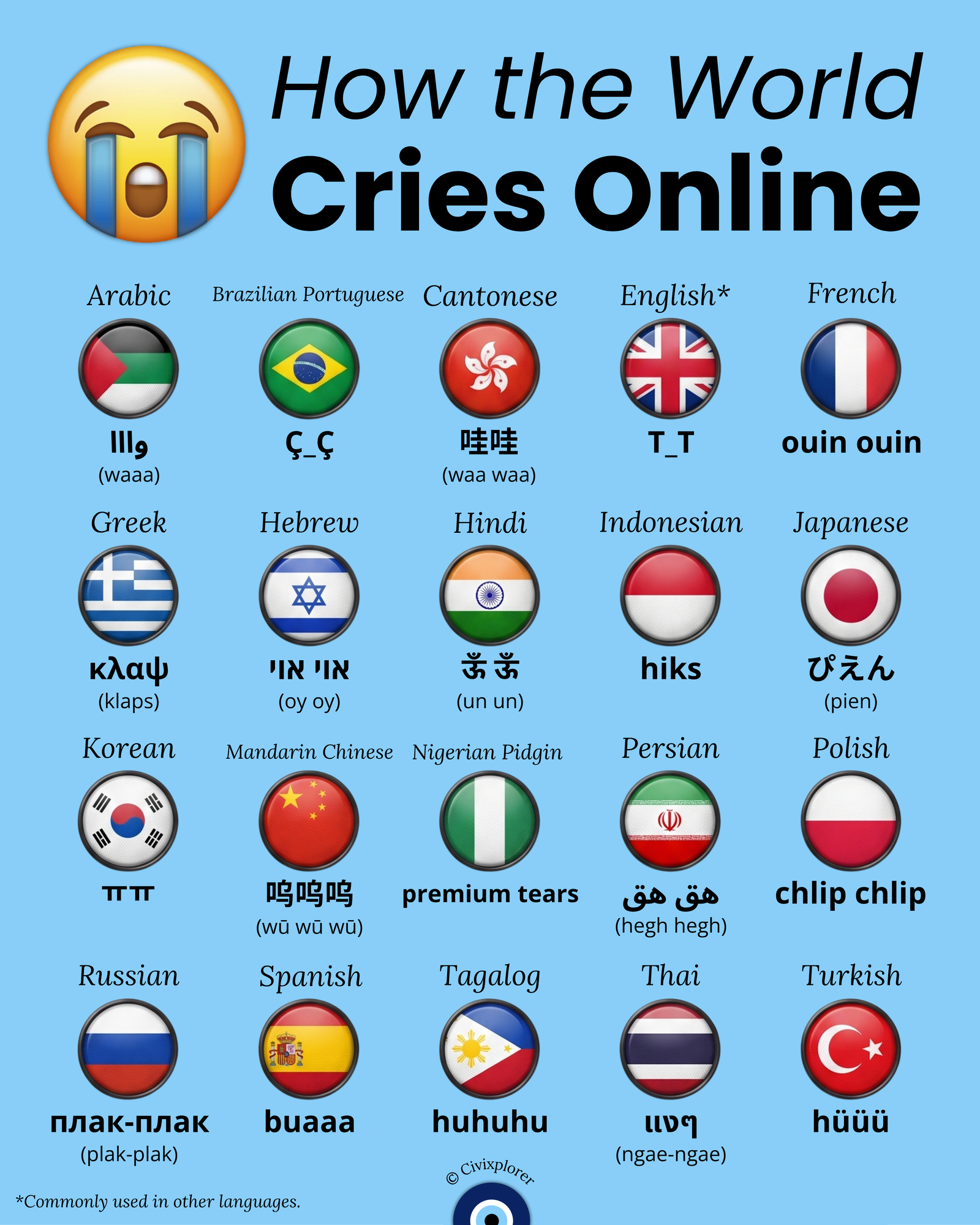
Crying is a universal human experience, but the way we translate those tears into digital text is anything but uniform. This linguistic phenomenon reveals a fascinating intersection of phonetics, writing systems, and internet culture. Digital expressions of crying generally fall into three distinct categories: typographic visual representations (drawing a face with letters), onomatopoetic sounds (spelling out the cry), and localized internet slang.
The Visual Criers: Letters as Art
Before the standardization of emojis, users relied on their own alphabets to "draw" crying faces. In South Korea, the characters ㅠㅠ (the vowel "yu") are iconic; the horizontal line represents a closed eye while the vertical lines represent streaming tears. Similarly, Brazilian Portuguese users have creatively adapted the ç-cedilla (ç), where the hook underneath the letter perfectly mimics a falling teardrop. Even the common English T_T—which originated from East Asian kaomoji—uses the vertical stem of the "T" to represent a flow of tears.
The Sound of Sadness: Localized Onomatopoeia
Most languages attempt to mimic the physical sound of crying through phonetics, but the "sound" changes based on a language's specific phonetic inventory. Languages like Spanish (buaaa), Arabic (waaa), and French (ouin ouin) emulate a loud, open-mouthed wail. Conversely, languages like Polish (chlip chlip) and Indonesian (hiks) capture the sharp intake of breath or the sound of sniffling. A particularly efficient example is found in Thai (แงๆ), which uses a repetition marker called Maiyamok to grammatically indicate a repeated "ngae" sound.
Modern Internet Slang and Cultural Idioms
Some cultures have moved beyond sounds and symbols in favor of unique modern idioms. In Nigerian internet culture, the term "premium tears" is a popular slang phrase used to describe intense sadness or heartbreak with a sarcastic, humorous edge. In Japan, the term "pien" (ぴえん) became a viral sensation among youth; it mimics a cute, pathetic crying sound used for mild disappointments—like running out of boba—rather than genuine tragedy.
Conclusion
Ultimately, the way we cry online is a snapshot of digital emotional linguistics. It shows how humans leverage their specific alphabetic quirks and cultural humor to convey emotion, proving that even in a globalized digital world, our local identities remain deeply rooted in the way we communicate.
Comments (0)
Join the Conversation
Login to share your thoughts with the community.
Login to Comment