
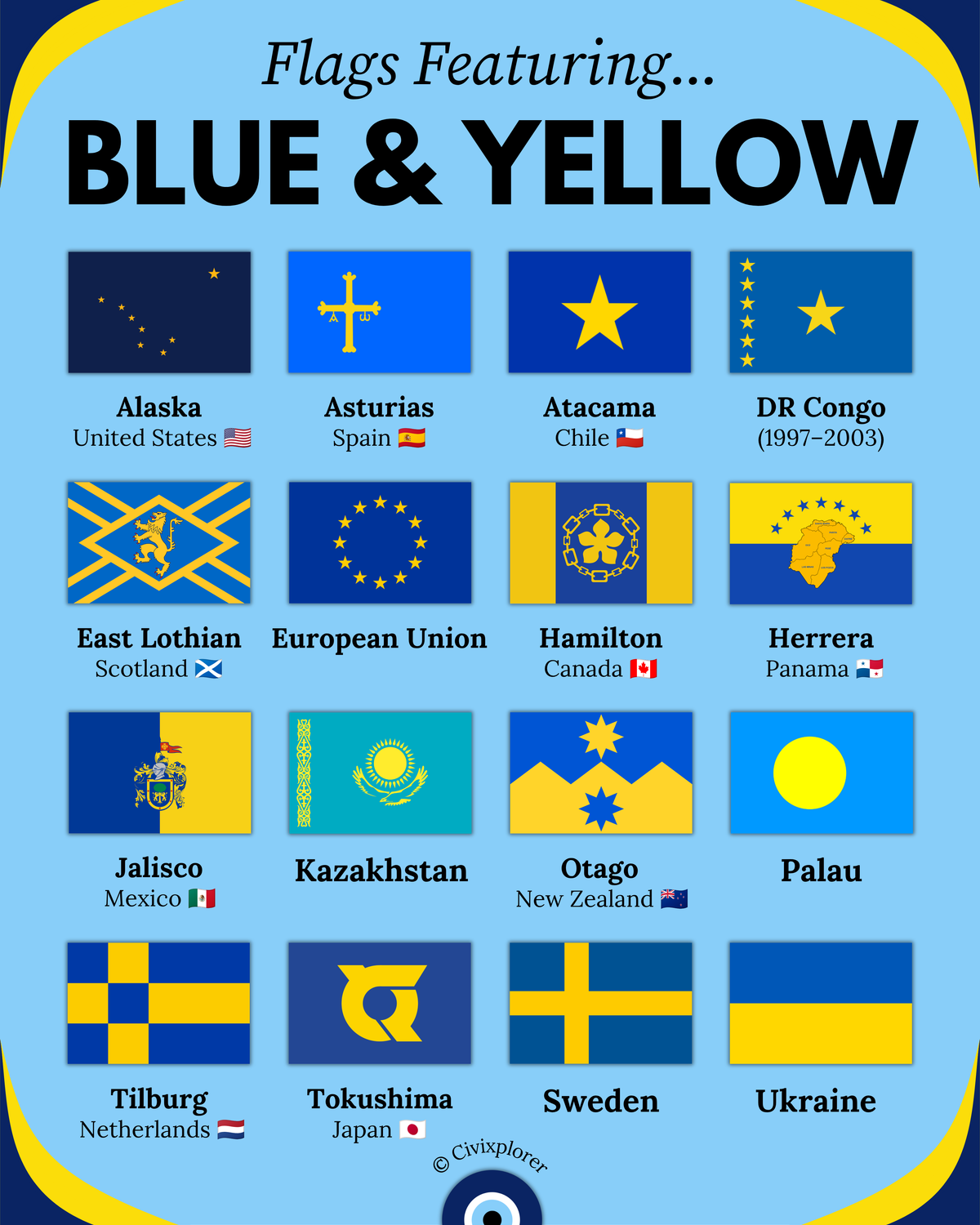
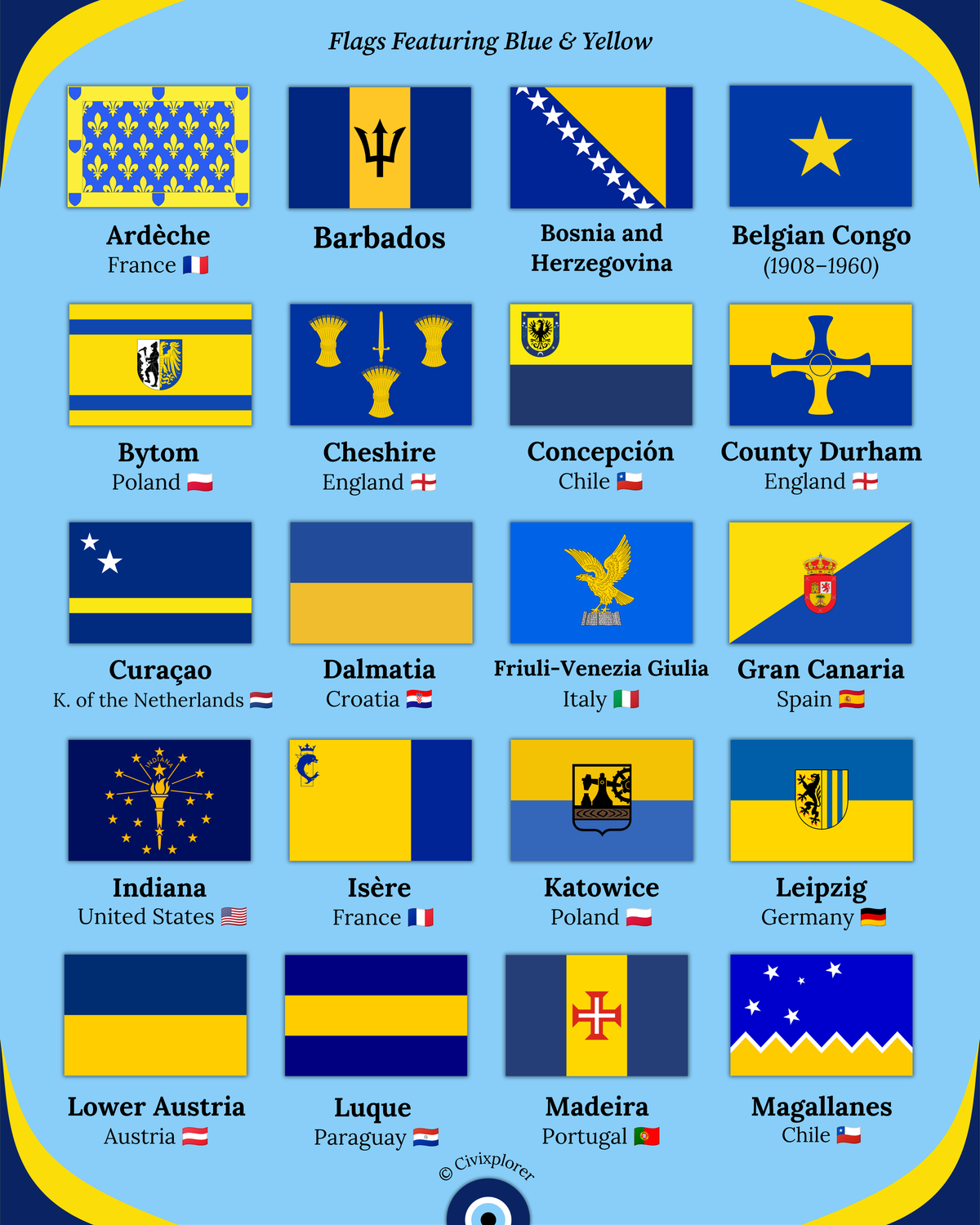
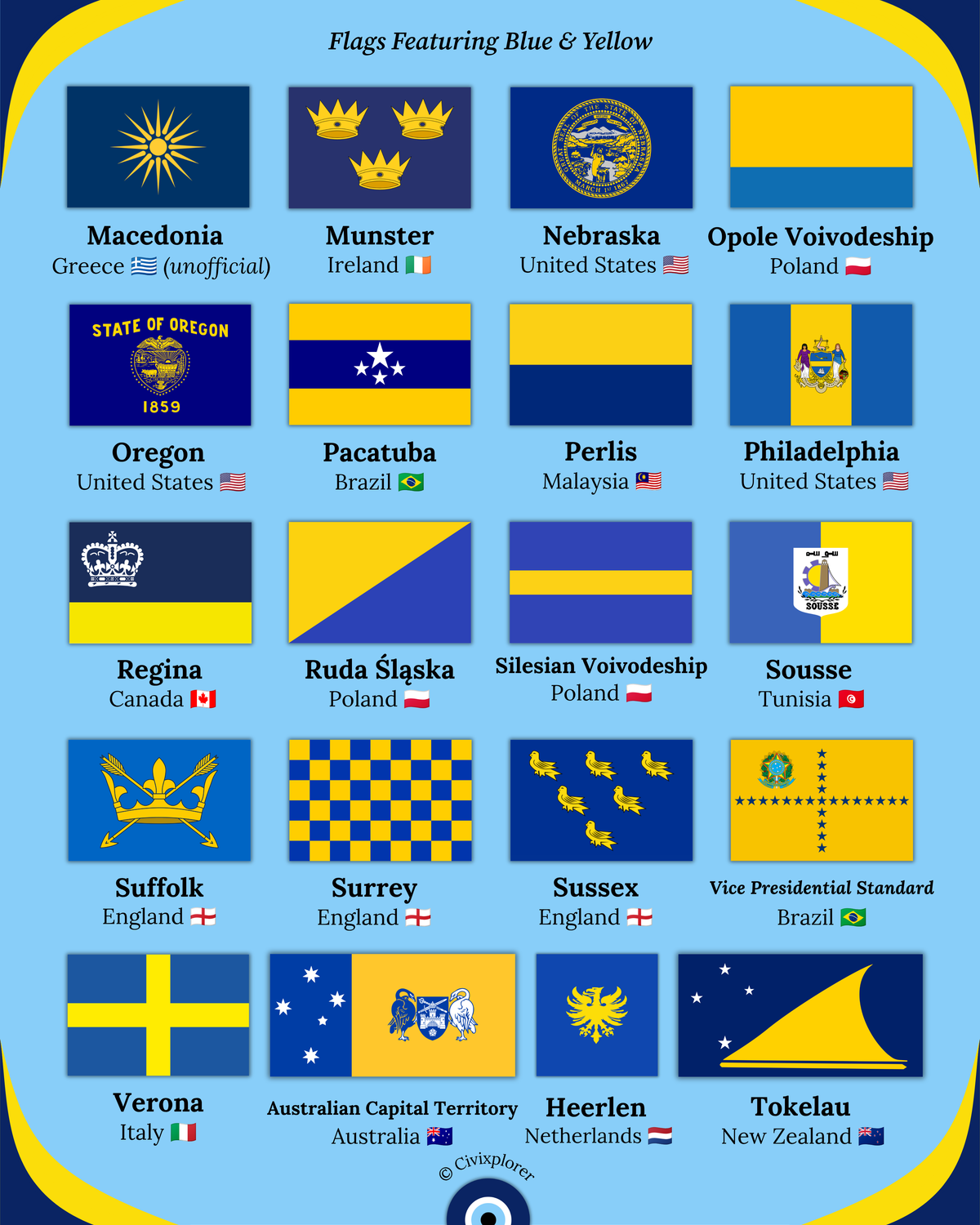
The combination of blue and yellow (or gold) is one of the most striking and frequently used pairings in the world of vexillology. From the sprawling wheat fields of Eastern Europe to the isolated islands of the Pacific, these two colors form a visual language that speaks of heritage, geography, and civic pride. While the aesthetic contrast is undeniable, the reasons behind this recurring palette are deeply rooted in centuries of history and specific cultural narratives.
The Heraldic Roots: Azure and Or
Many modern flags owe their existence to medieval European heraldry. This tradition follows the Rule of Tincture, which dictates that "metals" (gold/yellow and silver/white) should not be placed upon other metals, and "colors" (blue, red, green, black) should not be placed upon other colors. The pairing of Azure (blue) and Or (gold/yellow) provides maximum visual contrast, a necessity for identification on ancient battlefields. This legacy is visible today in regional flags like those of Silesia in Poland, where the golden eagle on a blue shield has been simplified into the bicolor flags of Katowice and Bytom. Similarly, the flags of English counties like Cheshire and Sussex utilize gold symbols on blue fields, maintaining a direct link to medieval coats of arms.
National Identity and Landscapes
Perhaps the most famous modern example of this palette is the national flag of Ukraine. While its colors originate from the 14th-century Kingdom of Galicia–Volhynia, the contemporary interpretation is purely geographic: the blue represents the boundless sky, while the yellow represents the golden wheat fields that define the nation as the breadbasket of Europe. In contrast, Sweden’s iconic yellow Nordic cross on a blue field traces back to the 13th-century royal coat of arms, symbolizing both Christianity and longstanding national sovereignty.
Celestial Symbolism: Suns, Moons, and Stars
Because blue naturally evokes the sky and ocean, yellow is the logical choice for representing celestial bodies. The flag of Kazakhstan features a golden sun and a soaring steppe eagle against a sky-blue background, representing peace, wealth, and the cultural heritage of the Turkic people. However, not every yellow disk is a sun. In the Pacific nation of Palau, the yellow circle on a light blue field represents the moon. In Palauan culture, the full moon signifies a time of harvest and communal activity, symbolizing a transition to self-government and tranquility.
Historical Footprints and Colonial Legacy
The presence of blue and yellow also tracks the movement of empires and the evolution of political ideologies. The flag of Philadelphia in the United States uses these colors specifically to honor "New Sweden," the 17th-century colony that originally settled the area. On a more complex note, the flags of the Belgian Congo and the Democratic Republic of the Congo have both featured a prominent yellow star on a blue field. Originally designed in 1877, the star was intended to represent the "light of civilization" reaching Africa—a stark reminder of how these colors have been used to frame colonial narratives before being reclaimed as symbols of post-independence unity and wealth.
Whether representing the unity of the European Union’s twelve stars or the maritime history of Barbados, the blue and yellow palette remains a versatile and enduring choice. It bridges the gap between ancient heraldry and modern aspirations, proving that "the eye of the world" often sees the most clarity in the contrast between the heavens and the earth.

Comments (0)
Join the Conversation
Login to share your thoughts with the community.
Login to Comment