
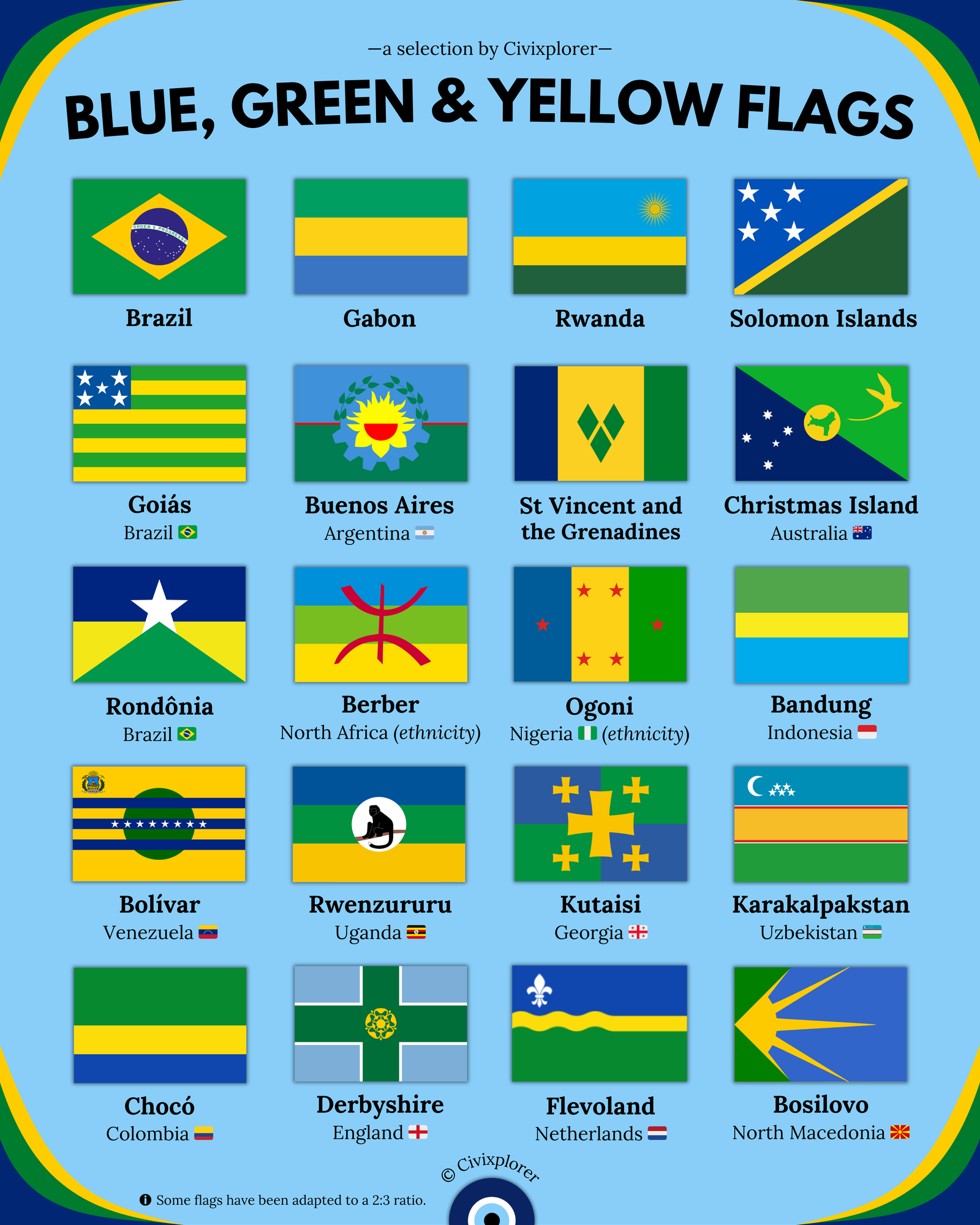
The blue, green, and yellow color palette is one of the most vibrant and visually striking combinations in vexillology. While flags are often grouped by geography or political alliances, examining them through their shared colors reveals a universal language of landscape and identity. This specific trio of colors frequently appears in the banners of nations and regions characterized by rich biodiversity, extensive coastlines, and a deep connection to the natural world.
Blue typically serves as a representation of the sky and the sea, symbolizing freedom, peace, and the vastness of the horizon. It reflects the deep connection between a nation and the waters that sustain it. Green is almost universally tied to the land, representing fertility, lush forests, and agricultural abundance. Yellow, or gold, often signifies prosperity, mineral wealth, and the sun that provides life and hope for a resilient future. Together, they form a nature-inspired palette that tells the story of how humanity interacts with its environment.
Brazil stands as perhaps the most iconic example of this combination. Interestingly, the meanings of its colors have shifted over time. Originally chosen to honor the royal Houses of Braganza and Habsburg, the colors are now widely recognized as symbols of the lush Amazon rainforest and the country’s vast gold reserves. This influence is also seen in subnational flags like those of Goiás and Rondônia, which maintain this aesthetic to highlight their own local resources and historical ties.
Beyond national borders, this palette is frequently adopted by ethnic groups to assert their identity and history. The Berber flag, representing the Amazigh people of North Africa, uses its colors as a literal map: blue for the Mediterranean and Atlantic, green for the mountains, and yellow for the Sahara Desert. At its center, the red Yaz symbol represents the "Free Man," a testament to their cultural recognition. Similarly, the Ogoni flag in Nigeria uses these colors to reflect fertile lands and mineral wealth while symbolizing a history of activism and the fight for environmental rights.
The palette also captures unique stories of human ingenuity and biodiversity. In the Netherlands, the flag of Flevoland tells the tale of land reclaimed from the sea, with wavy yellow lines symbolizing the transformation of water into fertile polders. Meanwhile, Christmas Island uses a diagonal split of green and blue to highlight its forested terrain and surrounding ocean, featuring a golden bosun bird to mark its unique ecological standing. Whether representing an ancient ethnic group or a modern engineering feat, the combination of blue, green, and yellow remains a powerful tool for visual storytelling across the globe.
Comments (0)
Join the Conversation
Login to share your thoughts with the community.
Login to Comment