
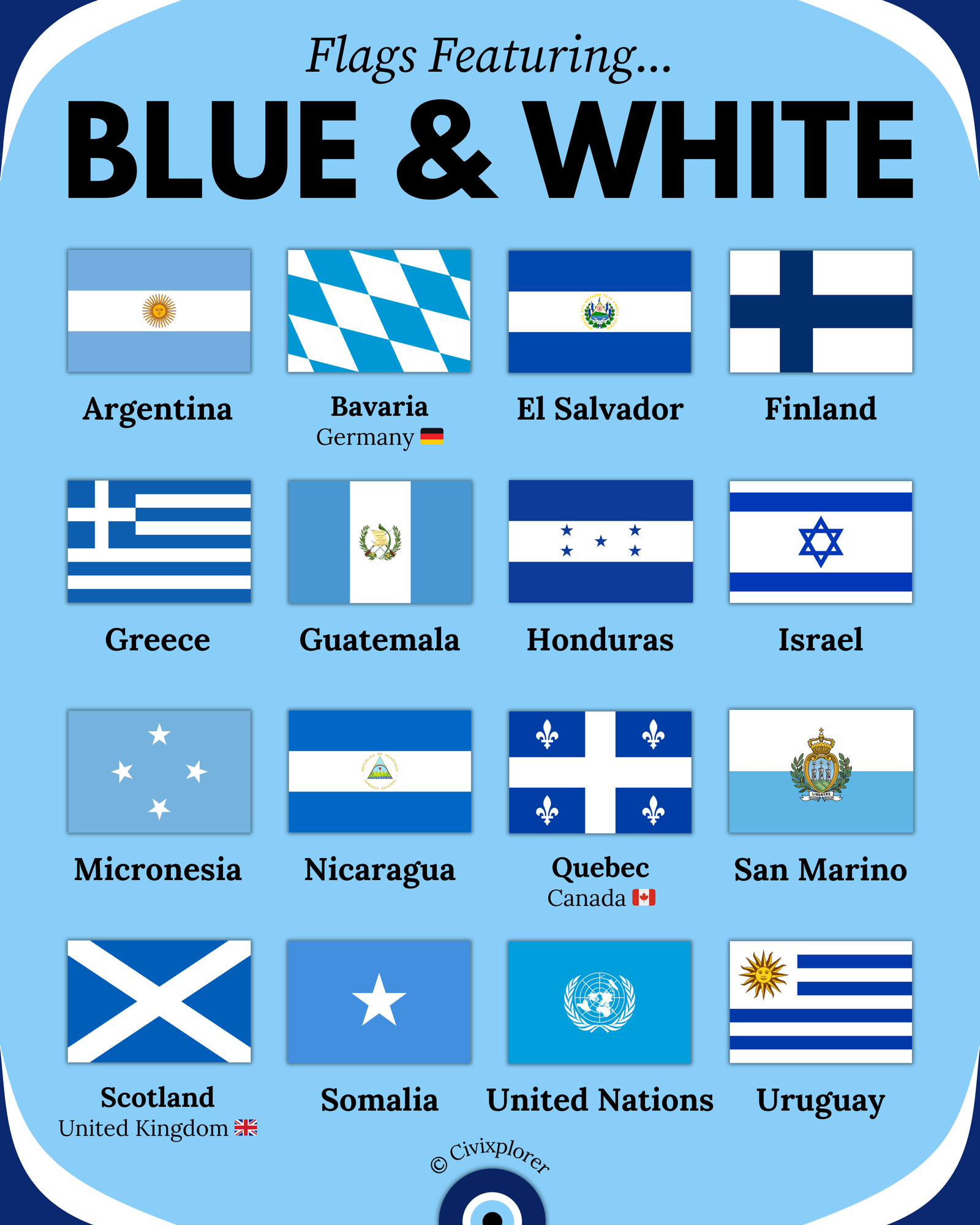
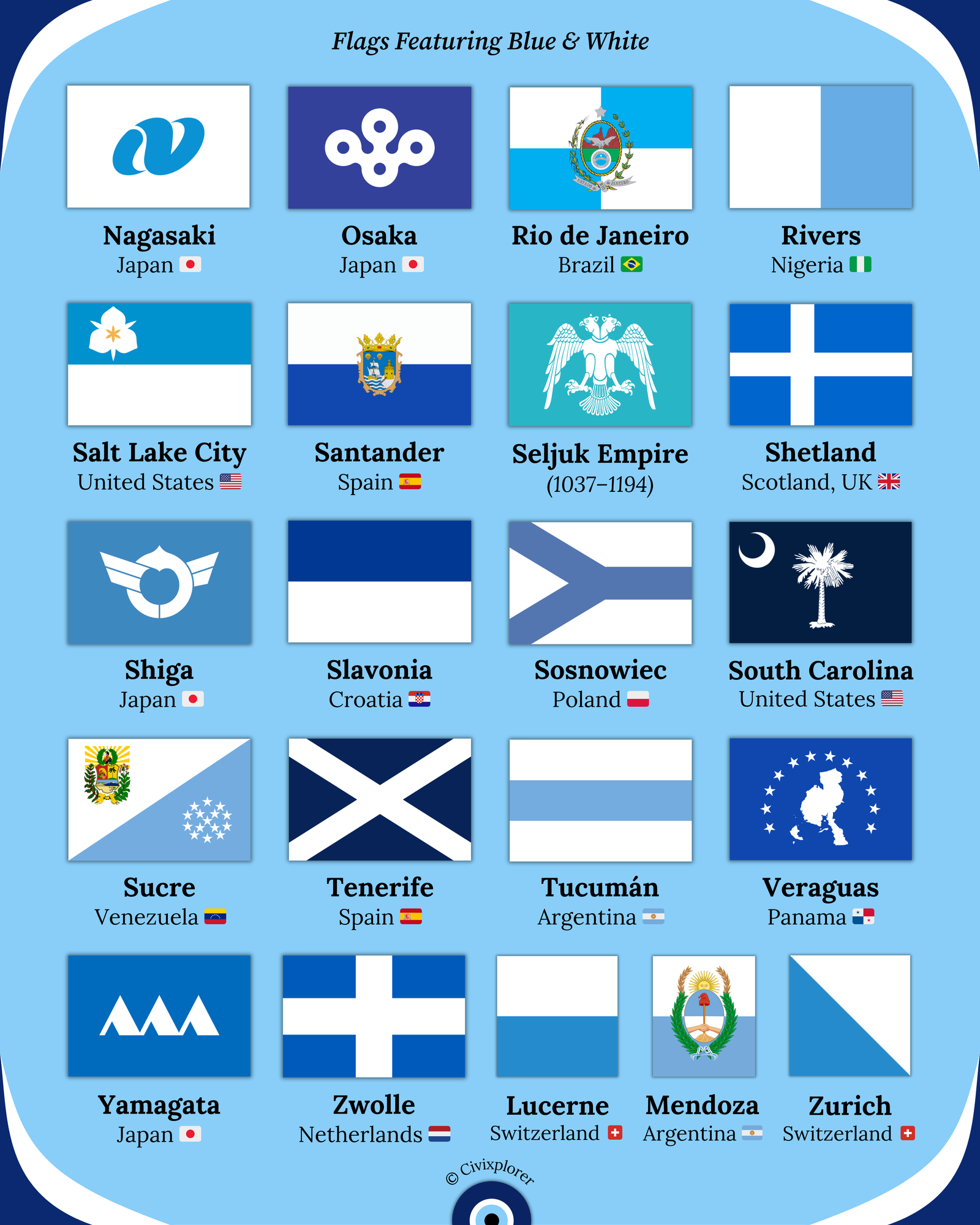
The blue and white palette is one of the most serene and adaptable combinations in the world of vexillology. From sovereign nations like Argentina and Greece to international organizations like the United Nations, this color duo appears across every inhabited continent, representing ancient empires and modern cities alike. While the pairing is visually striking, the meanings behind these colors are deeply rooted in local geography, religious faith, and political history.
One of the most frequent uses of blue and white is to represent the natural world, specifically water, sky, and snow. In Central America, flags like those of El Salvador, Honduras, and Nicaragua use blue bands for the Pacific and Caribbean oceans, with white symbolizing the land connecting them. Similarly, Finland's flag uses a blue cross for its thousands of lakes and white for its deep winter snow. In Greece, the colors evoke the Aegean Sea and the purity of the nation's independence struggle.
Religious and cultural identity also play a significant role in this color choice. Israel's flag is directly inspired by the traditional Jewish prayer shawl, the tallit, where white represents purity and blue symbolizes divine glory. Scotland's iconic saltire features the white cross of Saint Andrew against a blue sky, a design dating back to medieval legends. Even regional flags like Quebec’s fleur-de-lis on blue draw on French royal tradition and Catholic symbolism.
For many, this color scheme is the ultimate symbol of global peace and unity. The United Nations specifically chose light blue and white to stand in contrast to colors historically associated with war, a choice that directly influenced the flag of Somalia. Beyond national flags, the combination is highly favored in modern Japanese designs, such as the prefectural flags of Osaka and Chiba, which blend traditional mon crests with high-contrast aesthetics to represent local landmarks and harmony.
Comments (0)
Join the Conversation
Login to share your thoughts with the community.
Login to Comment