
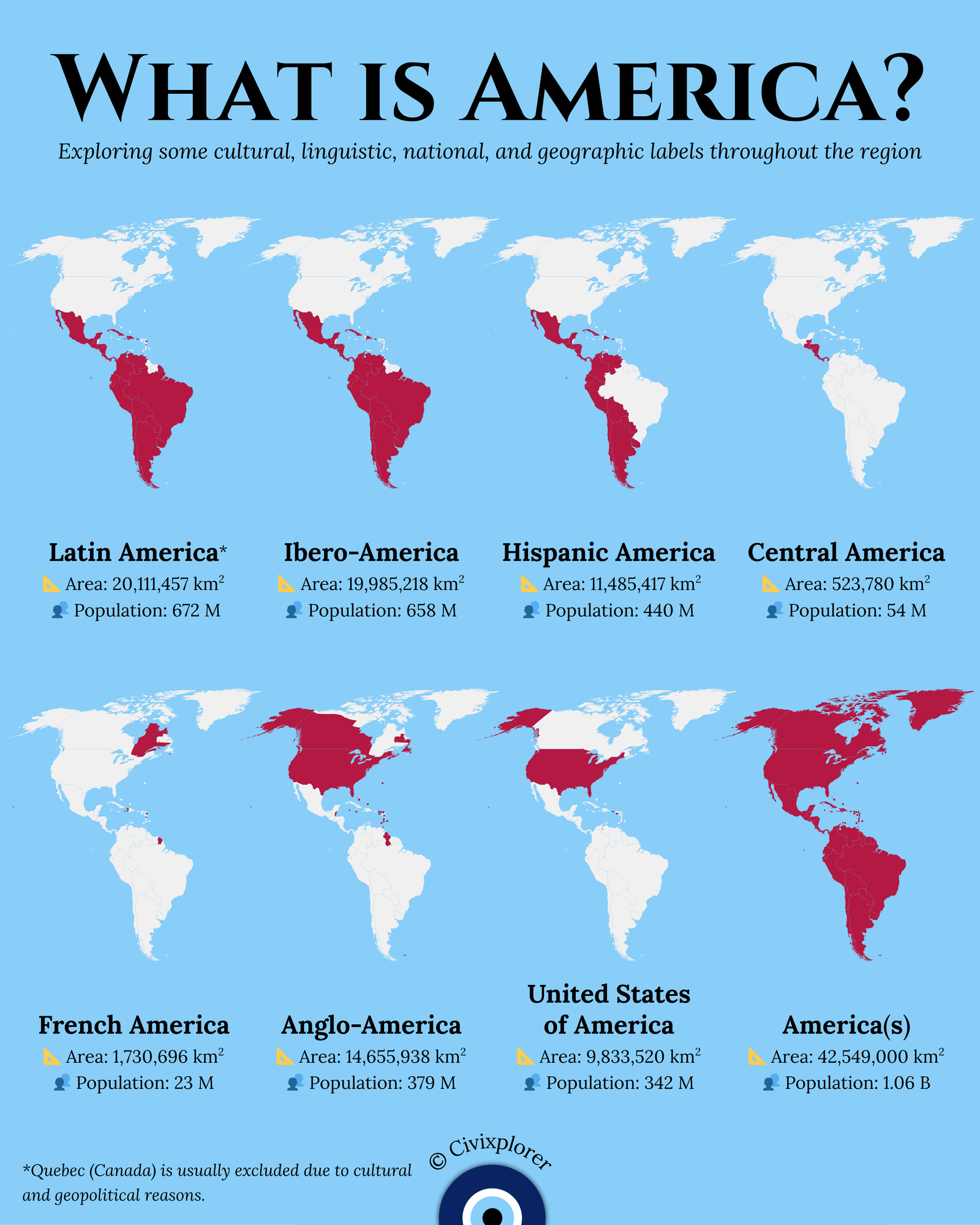
The question of what defines "America" is far more complex than a simple glance at a map might suggest. Across the Western Hemisphere, terms like Latin America, Anglo-America, and the Americas carry distinct meanings that shift depending on historical, linguistic, and political perspectives. Understanding these labels is essential for anyone looking to navigate the rich cultural tapestry of the region.
One of the primary tensions lies in the definition of "America" itself. In English, particularly within the United States, the term is frequently used as shorthand for a single nation. This convention emerged largely in the 20th century alongside growing global influence. However, in many other parts of the hemisphere, especially in Latin-speaking cultures, "América" is viewed as a single, unified continent stretching from the Arctic to Tierra del Fuego. To navigate this, geographers often use the plural "Americas" to acknowledge North and South as connected yet distinct landmasses.
Beyond the continental debate, the region is subdivided by colonial and linguistic heritage. Latin America is perhaps the most common grouping, traditionally encompassing regions from Mexico southward where Romance languages—derived from Latin—predominate. This includes Spanish, Portuguese, and French. However, this definition has its nuances. Hispanic America is a narrower term, focusing exclusively on Spanish-speaking territories and excluding Brazil. Meanwhile, Ibero-America emphasizes the colonial ties to the Iberian Peninsula, specifically Spain and Portugal.
On the other side of the linguistic divide sits Anglo-America, primarily composed of the United States and English-speaking Canada. This region is defined by British colonial laws, Protestant traditions, and the English language. In contrast, French America highlights areas with deep French influence, such as Quebec, Haiti, and French Guiana. Interestingly, while Haiti is consistently included in the Latin American narrative due to its revolutionary history and Romance language, Quebec is often excluded. Despite its French roots, Quebec's integration into the Anglo-dominant framework of Canada and its distinct colonial path set it apart.
Geographic boundaries also invite debate. Central America is strictly defined as the isthmus from Guatemala to Panama. While Mexico shares deep cultural and historical roots with its southern neighbors, it is geographically part of North America. This dual identity—economically tied to the north through agreements like the USMCA but culturally anchored to the south—illustrates how regional labels are rarely set in stone. They are tools shaped by history and power, evolving as migration and globalization continue to blend the lines between the Anglo and Latin worlds.
Comments (0)
Join the Conversation
Login to share your thoughts with the community.
Login to Comment